Discover cross platform app development services to cut costs, ship MVPs in 4–8 weeks, and reach iOS and web with one codebase. See our 2026 picks. Learn more.

Startup founders face a tough choice: build for iOS or Android first? Going with one risks alienating half your potential users, while building for both doubles your time and cost. This is where cross platform app development services come in. They offer a smarter way to launch your product on every device at once, using a single, unified codebase. This approach is no longer just a budget alternative; for many startups, it’s the most strategic way to validate an idea and get to market faster. This guide will walk you through what these services offer, why they are critical for modern businesses, and how to choose the right partner to bring your vision to life.
What Is Cross Platform App Development?
Cross platform app development is the process of building a single application that can run on multiple operating systems, like iOS, Android, and the web, from a shared codebase. Instead of writing separate code for each platform, developers write it once and deploy it everywhere. This principle of code reusability is the core benefit, saving immense time and resources.
Traditionally, this meant using frameworks like React Native or Flutter to create mobile apps. Today, the definition has expanded. Modern cross platform app development services also include building powerful, responsive web applications using no code tools like Bubble. These apps work seamlessly in any browser on any device, offering a native like experience without needing an app store download. For startups, this web first approach is often the quickest path to launching a Minimum Viable Product (MVP).
Cross Platform vs. Native: What to Expect
Choosing between cross platform and native development involves a trade off between speed, cost, and platform specific features.
Native App Development
Pros: Delivers the highest performance, provides full access to device hardware (like cameras and GPS), and offers the best, most integrated user experience.
Cons: Requires separate, specialized teams for iOS and Android, leading to higher costs and longer development timelines.
Cross Platform App Development
Pros: Significantly faster time to market and can reduce development costs by up to 40%. A single codebase simplifies updates and maintenance, with developers often reusing 50% to 80% of the code across platforms.
Cons: May have slight performance limitations for graphically intense applications and might face delays in supporting the very latest OS features.
For most startups, the advantages of cross platform development far outweigh the drawbacks. The ability to launch quickly on a limited budget is critical for validating a business idea before competitors get there first.
Why Cross Platform Is the Future (for Many Use Cases)
The market for cross platform frameworks is growing rapidly, projected to climb from $50 billion in 2025 at a 20% CAGR. This growth is fueled by clear business advantages that are especially valuable for early stage companies.
Accelerated Time to Market: Instead of a typical 6 to 12 month timeline for native apps, many MVPs can be launched in weeks. Modern agencies can deliver a functional, no code web app in just 4 to 8 weeks.
Major Cost Savings: Using a single team and codebase can cut initial development costs significantly. Ongoing maintenance is also more affordable since you only need to manage one version of the app.
Wider Audience Reach Instantly: Why choose between the massive global market share of Android (around 71%) and the high spending users on iOS? A cross platform approach lets you reach everyone on day one, maximizing your chances of finding product market fit.
Simplified Updates and Maintenance: When you need to fix a bug or add a new feature, you only have to do it once. A good partner will offer ongoing maintenance plans to keep your app secure and performant. If you need a team that can build and support your vision, check out the services offered by Bricks Tech.
Ecosystem Snapshot: Popular Frameworks and Tools
The world of cross platform app development services is diverse, with tools suited for different needs and complexities.
Traditional Code Frameworks
Flutter: Developed by Google, Flutter is now the most popular cross platform framework, used by 46% of developers. It’s known for its expressive UI and strong performance.
React Native: Created by Facebook, React Native allows developers to use their existing JavaScript skills. It powers thousands of apps and has a massive community.
Modern No Code and Low Code Platforms
The newest evolution in cross platform development comes from visual programming tools. These platforms empower teams to build sophisticated applications without writing traditional code.
Bubble.io: A leading no code platform for building interactive, multi user web applications like marketplaces, social networks, and internal tools. It’s a powerful choice for MVPs because what you build is instantly cross platform.
Supabase: An open source alternative to Firebase, Supabase provides the backend infrastructure (database, authentication, storage) needed to power complex apps.
n8n: A workflow automation tool that helps connect different APIs and services, allowing you to build complex logic without custom code.
How to Choose the Right Framework and Services Partner
Selecting the right partner is just as important as choosing the right technology. Look for a team that aligns with your startup’s goals and operates with transparency.
Evaluate Vendor Reliability
A great idea needs a reliable partner to bring it to life. Look for agencies that demonstrate credibility through verified client reviews on platforms like Clutch, detailed case studies with real metrics, and a transparent process. Do they think like founders? The best partners understand the need for speed, are sensitive to budgets, and focus on business outcomes, not just engineering tasks. A design first approach with high fidelity wireframes and weekly demos ensures alignment and prevents costly rework.
Assess Framework Maturity and UI Customization
The framework you choose impacts your app’s future. Mature frameworks like Flutter and React Native have large communities, extensive libraries, and proven track records, making them reliable choices. They also offer pixel perfect UI customization for a completely unique brand experience. Modern no code platforms like Bubble provide a different advantage: speed. They offer robust, highly customizable UI components that allow you to build a polished, functional MVP in weeks while still achieving a professional look and feel.
Prioritize Security Considerations
From day one, security cannot be an afterthought. When evaluating a partner or platform, ask about their security practices. Key areas to cover include secure user authentication (including social logins), data encryption at rest and in transit, and secure API integrations. Using managed backends like Supabase or leveraging the built in security features of platforms like Bubble can offload much of this complexity, letting you focus on your product.
Confirm Post Launch Support
An app is a living product that requires ongoing attention. Before signing a contract, ensure your partner offers clear maintenance and support plans. These should cover bug fixes, security patches, performance monitoring, and a system for adding new features. A reliable partner for cross platform app development services will stand by their work and help you succeed long after launch.
Ready to see how a streamlined process can bring your app to life? Explore projects we’ve shipped and learn more about building with Bricks Tech.
Top 6 Cross Platform App Development Services
Now that you have a foundational understanding of cross platform app development, it’s time to explore the leading services that make it all possible. These six platforms have been selected for their robust features, strong community support, and ability to deliver high performing applications across multiple operating systems from a single codebase. By examining the unique strengths of each, you can better determine which service aligns with your project’s specific needs and goals.
1. Flutter
Flutter is Google’s open source UI toolkit built for momentum: a single codebase that renders beautiful, high fidelity apps across iOS, Android, web, and desktop. For fintech, marketplaces, and consumer MVPs, its rapid iteration and hot reload make 6 to 12 week prototypes not just possible, but common.
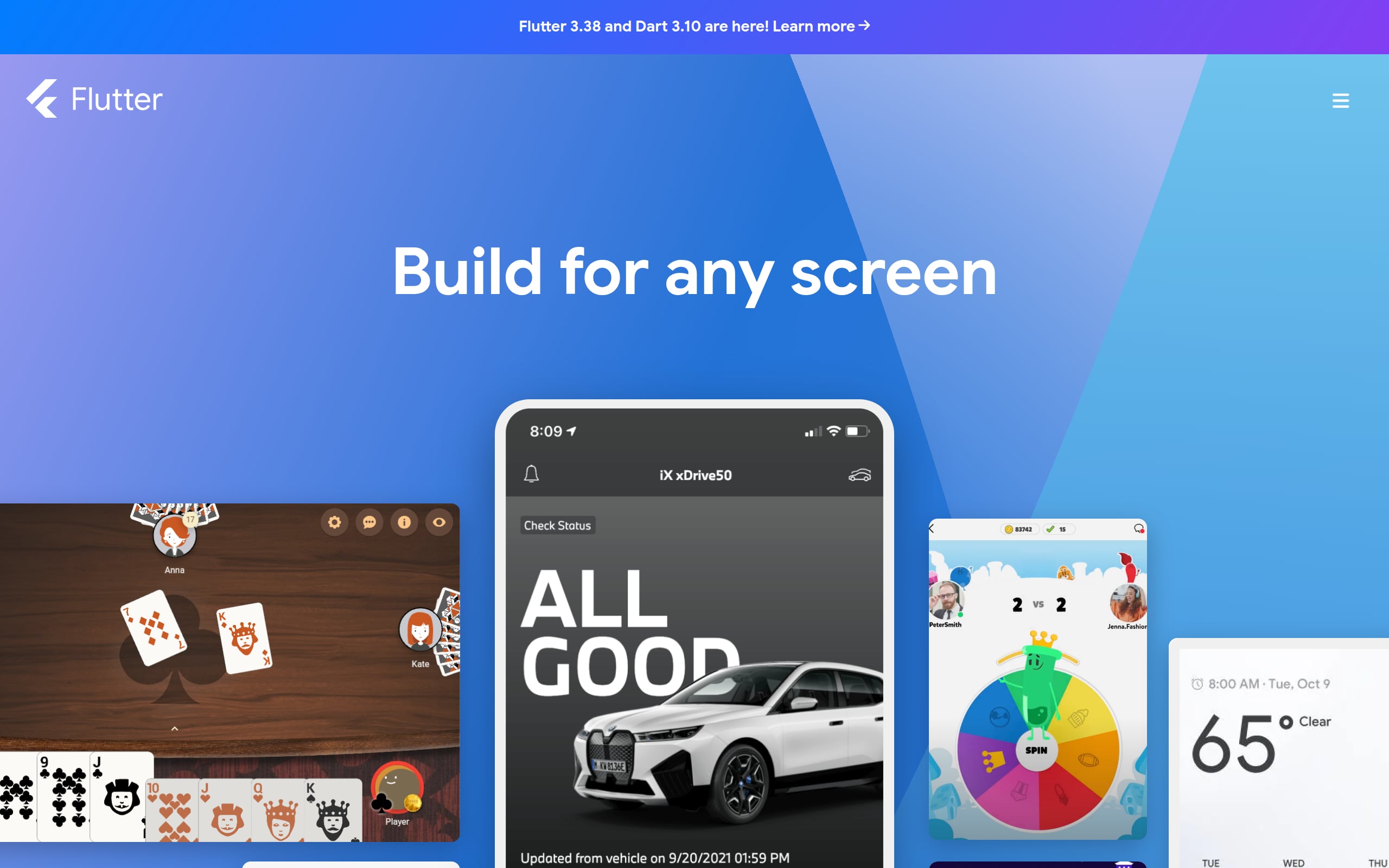
HQ/Team size: Mountain View, CA • Maintained by Google + global contributors
When speed and polish both matter, founders pick Flutter for:
A truly unified codebase that ships to iOS, Android, web, and desktop, cutting maintenance and feature parity overhead.
Lightning fast UI iteration with stateful hot reload and weekly demo cadence baked into the workflow.
Add to App flexibility to drop Flutter into existing native apps and still reach device APIs without friction.
Hardware accelerated rendering and first rate profiling/debug tooling for dependable production performance.
Mature testing and CI/CD support that keeps post launch updates stable and predictable.
Stack: Dart, FlutterFire (Auth/Firestore), BLoC/Riverpod, flutter_test, GitHub Actions, Codemagic
Platforms: iOS, Android, Web, Windows, macOS, Linux, Embedded
Proof in the wild:
Google Pay: Scaled globally to 100M+ users with ~70% lower engineering effort.
eBay Motors: Beta launched in three months with 98% shared code and 2x faster development.
BMW Group: Powers My BMW and MINI apps, enabling rapid, multi country rollouts.
Toyota: Runs in dash infotainment, bringing a premium, smartphone like UX to the cabin.
Founder takeaway: Need pixel perfect UI across four+ platforms and a credible 6 to 12 week MVP runway? Flutter is a strong first pick.
2. React Native
React Native turns a single TypeScript codebase into near native iOS and Android apps, with a thriving ecosystem that ships fast. It shines in consumer, commerce, and social use cases where iteration velocity and a 6 to 12 week MVP window can determine product market fit.
HQ/Team size: Distributed (Linux Foundation) • ~1,500+ quarterly active OSS contributors
Why founders pick it:
Near native performance from a single TypeScript codebase, with optional desktop, TV, and visionOS reach.
Hermes + the New Architecture (Fabric) for snappier startup, lower memory, and smoother UI.
Over the air updates via Expo EAS to ship fixes and tweaks instantly, with no app store wait.
A deep library ecosystem for complex UI, native modules, CI/CD, and monitoring.
Stack: React Native, TypeScript, Expo (EAS), Hermes, Fabric, React Navigation, GraphQL/REST
Platforms: iOS, Android, Web, Windows, macOS, TV, visionOS
Proof in the wild:
Shopify: Migrated all mobile apps; >99.9% crash free and sub 500ms screen loads.
Discord: Unified feature delivery and halved median startup times.
Bloomberg: Rebuilt flagship app in ~5 months, roughly half the usual timeline.
Founder takeaway: If you want web like iteration speed with native reach and instant OTA updates, React Native is hard to beat.
3. .NET MAUI
For teams already invested in C#/.NET, .NET MAUI is the straightest path to shipping native iOS, Android, Windows, and macOS apps from one codebase. It’s especially compelling when you can reuse business logic or even Blazor components to compress MVP timelines without sacrificing enterprise grade standards.
HQ/Team size: Redmond, WA • ~228,000 employees
Why founders pick it:
A single C#/.NET codebase targeting iOS, Android, Windows, and macOS, aligned tightly with .NET release cadence and support.
Blazor Hybrid to embed Razor components for shared web and native UI, while keeping full device API access.
First class auth and platform integrations (e.g., Microsoft Entra ID, native iOS/Android SDKs).
The official modernization path for Xamarin apps, reducing migration risk and effort.
Stack: .NET, C#, XAML, Blazor Hybrid, MVVM, Azure DevOps
Platforms: iOS, Android, Windows, macOS
Proof in the wild:
Demant (Healthcare): Unified the Oticon Companion app via a single codebase, streamlining medical grade delivery.
FinLocker (Fintech): Scaled to 40+ white labeled apps, empowering 1,000+ loan officers.
Irth Solutions (Utilities): Modernized risk management across Android, iOS, and Windows from one base.
Founder takeaway: If your backend and teams are already .NET heavy, MAUI lets you move fast without fragmenting your stack.
4. Ionic
Ionic lets web developers ship native iOS, Android, and progressive web apps with speed and budget discipline. For content rich experiences, e commerce, and internal tools, it delivers the practical win: one JavaScript codebase, native access via Capacitor, and a polished component library.
HQ/Team size: Madison, WI • ~50 to 200 employees
Why founders pick it:
Build once with React/Angular/Vue and ship to iOS, Android, and the web using 100+ adaptive UI components.
Capacitor provides direct access to device features (camera, biometrics) and a robust plugin ecosystem.
Support for enterprise design systems via Stencil to keep brand and UX consistent at scale.
Backed by an active OSS community and OutSystems for long term investment and stability.
Stack: Ionic Framework (Angular/React/Vue), Capacitor, Stencil, Cordova
Platforms: iOS, Android, Web (PWA), Desktop (via Electron)
Proof in the wild:
Sworkit: Rebuilt in 10 weeks; >$200k saved annually by consolidating native efforts.
US Foods: One engineer manages all native builds for a major B2B app.
AAA: One codebase powering a unified app for 62M members across 20+ regional clubs.
Founder takeaway: If you’ve got strong web talent and need to cover mobile and web quickly, Ionic is a pragmatic, cost efficient choice.
5. Kotlin Multiplatform
Kotlin Multiplatform (KMP) lets you share core business logic across Android and iOS while keeping native UIs, or use Compose Multiplatform to unify the interface. It’s tailor made for complex apps needing native performance and incremental adoption without a risky rewrite.
HQ/Team size: Prague, Czech Republic • ~2,200 to 2,600 employees
Why founders pick it:
Share business logic across platforms while retaining native UI, or unify with Compose Multiplatform when it fits.
Adopt gradually by dropping KMP modules into existing apps, shipping within normal release cycles.
Production ready toolchain with a high performance compiler and modern IDE support.
Strong developer experience: cross language navigation, debugging, and Hot Reload for fast feedback.
Stack: Kotlin Multiplatform, Compose Multiplatform, Coroutines, Ktor, SQLDelight, Gradle
Platforms: Android, iOS, iPadOS, Web (JS/Wasm), Desktop (Windows/macOS/Linux)
Proof in the wild:
Forbes: Ships simultaneously on iOS and Android by sharing >80% of core logic.
McDonald’s: Unified mobile teams; saw improved performance and fewer crashes.
Cash App: Reduced certain release times from days to hours via shared workflows.
Founder takeaway: When native UX is non negotiable but duplication isn’t, KMP strikes the balance with shared logic and flexible UI.
6. NativeScript
NativeScript compiles truly native iOS and Android apps from a single JavaScript/TypeScript codebase, with no WebView in sight. It’s a sharp fit for startups that want native performance, rapid prototyping, and code sharing with existing web stacks.
HQ/Team size: Distributed (OpenJS Foundation) • Community run
Why founders pick it:
Build once with your preferred front end (Angular, React, Vue, Svelte, Solid) and get native apps, with no WebView.
Modern tooling (Vite, native ESM runtimes) for quick iteration and fast feedback loops.
Direct access to native APIs plus official plugins (ML Kit, camera) and easy CocoaPods/Maven usage.
Optional commercial support from vetted partners for SLAs, audits, and enterprise delivery.
Stack: NativeScript 9, TypeScript, Angular/React/Vue flavors, Vite, Native ESM runtime, NativeScript CLI
Platforms: iOS, iPadOS, Android, visionOS, macOS (via Catalyst)
Proof in the wild:
Yape (BCP): Scaled to 20M+ users across Peru/Bolivia, proving national scale fintech reliability.
Globe Telecom: Powers the high traffic GlobeOne consumer utility app.
PreSonus: Ships the MyPreSonus companion app across its hardware/software ecosystem.
Founder takeaway: Want native performance with JavaScript/TypeScript and full device access without a rewrite? NativeScript keeps you in the web lane while delivering native results.
Future Enablers and What They Mean for Services
The future of cross platform development is being shaped by artificial intelligence. An AI first approach is no longer a novelty; it’s a core driver of efficiency.
AI tools can now assist in everything from generating code snippets to designing user interfaces and performing quality assurance tests. This accelerates development cycles even further, reducing bugs and allowing for smarter, more dynamic application logic. Partners who integrate AI and have experience with tools like ChatGPT and Claude can build more sophisticated features faster. This modern toolchain, combining no code platforms with AI and scalable backends, represents the next frontier for rapid, high quality cross platform app development services.
Educational Resources for Founders
For founders looking to deepen their understanding, several resources are invaluable. The official documentation for frameworks like Flutter, React Native, and Bubble are the best starting points. Online communities on platforms like Reddit and Discord offer real world advice from other developers and founders. Finally, blogs and publications focused on startups and technology provide strategic insights into choosing the right development path.
Conclusion
For startups and fast moving businesses, cross platform development is the most logical, efficient, and cost effective way to launch a new application. It minimizes risk by allowing you to test your core business idea with a real audience across all devices, without overinvesting in separate native builds. Whether you use a traditional framework or a modern no code platform, the goal is the same: get to market quickly, gather feedback, and iterate. By choosing the right strategy and a founder focused partner, you can turn your vision into a scalable, high quality product in a fraction of the time.
Ready to build your cross platform app in weeks, not months? Discuss your project and explore how Bricks Tech builds scalable MVPs with a founder focused process.
FAQ
What are cross platform app development services?
Cross platform app development services involve designing and building a single application that functions seamlessly on multiple operating systems, such as iOS, Android, and the web, using a single codebase to save time and reduce costs.
How much does it cost to build a cross platform app?
While costs vary, an MVP built with no code platforms can start around $10,000. This is significantly more affordable than native development, which can easily exceed $50,000 to $150,000 per platform.
How long does cross platform development take?
With modern no code tools and an agile agency, a functional MVP can be launched in as little as 4 to 8 weeks. Traditional development using frameworks like React Native or Flutter may take 3 to 6 months.
Is no code good for cross platform app development?
Absolutely. No code platforms like Bubble are excellent for building web applications that are inherently cross platform. They are ideal for MVPs, internal tools, and many types of customer facing apps, enabling rapid development and iteration.
Can a web app be listed on the App Store or Google Play?
Yes. A web application can be “wrapped” in a native container, allowing it to be submitted to and listed on the major app stores while still being powered by a single web codebase.
What is the best framework for cross platform development?
The “best” framework depends on your project’s specific needs. For rapid MVP validation and web first products, Bubble is a top choice. For mobile apps requiring more custom interactions, Flutter and React Native are the leading frameworks.
Do you offer ongoing support after the app is launched?
Yes, reliable agencies provide ongoing maintenance plans. These services typically include proactive monitoring, bug fixes, performance optimizations, and functionality improvements with a guaranteed response time to ensure your app remains healthy and secure.