Discover the best education app development services in 2026: top 10 companies, features, compliance, timelines, and costs. Compare partners and get started.

Education is moving fast. Districts, universities, bootcamps, and creators want better learning experiences on web and mobile. The right education app development services help you validate ideas quickly, integrate with existing systems, and keep student data safe. This guide walks through the types of elearning solutions, key features, core compliance requirements, architecture choices, timelines, costs, and the trends shaping decisions in 2026.
Types of Custom eLearning Solutions
Effective education app development services go beyond a single app type. They cover a range of platforms tailored to specific learning and administrative needs.
Custom eLearning and Tuition Apps
This involves creating unique mobile and web applications for learning. These platforms can include features like personalized learning paths, interactive content, and progress tracking for students. Tuition apps specifically connect students with tutors for one on one or group sessions, often including scheduling and payment integration.
Learning Content Management System (LCMS)
An LCMS is a platform designed for creating, managing, and delivering educational content. Unlike a standard LMS, an LCMS focuses on the content itself, allowing instructional designers to build and reuse learning objects across multiple courses. This is ideal for organizations with extensive learning content management needs.
Online Exam Management Systems
These systems automate the entire examination process, from creating question banks and scheduling tests to conducting secure online exams and generating instant results. They often include features for remote proctoring and robust analytics to ensure integrity.
Corporate and Employee Engagement Apps
Businesses use custom apps for employee training, onboarding, and continuous development. An induction and orientation app can streamline new hire training, while an employee engagement app can provide ongoing learning opportunities and track professional growth, improving retention and skills.
Specialized Digital Learning Platforms
Development services also cover niche areas like creating a digital textbook platform for interactive and accessible course materials or executing library digitization projects to make resources available online.
Core Features for Modern eLearning Platforms
A successful educational app combines engaging features for learners with powerful tools for administrators.
Learner Engagement and Management
User Profile: Allows learners to manage their information, track progress, and customize their experience.
Progress Tracking: Visual dashboards and reports show learners how they are advancing through course material.
Course Catalog: An organized and searchable library of available courses and learning paths.
Scheduling and Calendar Integration: Helps users manage their study time and sync deadlines with their personal calendars.
Document Sharing: Securely share and access course materials, assignments, and resources.
Dark Mode: Reduces eye strain and improves accessibility for users in low light environments.
Interactive and Collaborative Learning
Forum and Discussion: Creates a community where learners can ask questions and collaborate.
Chat Support: Provides real time assistance to learners when they need help.
Interactive Content: Engages users with quizzes, simulations, and multimedia elements.
Audio Streaming: Delivers lectures, podcasts, and other audio based learning materials.
Administration and Analytics
Attendance Tracking: Automates the process of monitoring learner participation in live sessions or courses.
Big Data Analytics: Gathers and analyzes learning data to provide insights into student performance and content effectiveness.
What to Look For in an Education App Development Partner
Choosing a partner for education app development services is half strategy, half execution. Prioritize teams that offer comprehensive consulting for elearning and can design, build, and ship, not just talk.
Clear week by week plan with visible milestones and demos
Design first workflow with high fidelity Figma prototypes before a single line of build work
Proof of integrations with LMS platforms, SIS, payment and identity providers (recent projects)
Familiarity with AI features, analytics, and personalization that still respect privacy
A strategy for the modernization of an elearning system if you are upgrading a legacy platform
A maintenance plan with response time commitments
Bricks Tech specializes in fast, founder friendly builds using no code, low code, and full stack where needed, with weekly demos and a refundable first week in the flagship package. If speed and clarity are top priorities, start with a free consult at Bricks Tech.
Compliance, Security, and Accessibility Must Haves
Education apps handle sensitive data. Your shortlist for education app development services should cover these standards and controls.
Verifiable facts to guide your checklist
FERPA protects the privacy of student education records in the United States. Products that handle student records must implement access controls and consent workflows. See the overview of FERPA here FERPA.
COPPA applies to online services directed to children under 13 in the United States and requires verifiable parental consent. Read more at the act summary COPPA.
GDPR is the primary data protection law for residents of the European Union and includes rights such as access, rectification, and erasure. See the regulation summary GDPR.
WCAG 2.1 is a widely adopted standard for accessible digital experiences and many education buyers target level AA for conformance. See the specification WCAG 2.1.
Section 508 requires federal agencies to make electronic and information technology accessible, which many education institutions use as a benchmark. Learn more Section 508.
FISMA requires U.S. federal agencies to implement security programs for their information systems, a standard often adopted by educational institutions handling federal data.
SCORM is a set of technical standards for eLearning content so that it can work across LMS platforms. Reference overview SCORM.
xAPI, also called Tin Can API, enables tracking learning experiences beyond a traditional LMS through statement data. Reference overview xAPI.
LTI 1.3 allows deep linking between tools and LMS platforms and uses OAuth 2 and JSON Web Tokens for modern security. See the spec page LTI 1.3.
SOC 2 reporting evaluates controls for security, availability, processing integrity, confidentiality, and privacy. Learn more SOC 2.
AES is a widely used encryption standard for data at rest in modern cloud systems. Overview here AES.
OWASP highlights the most critical web application risks used by many teams as a baseline hardening checklist. See the foundation page OWASP.
Ask vendors to describe how they meet the above, how they log and audit access, and how they handle data subject requests. Bricks Tech includes threat modeling and privacy by design in scoping, then bakes controls into build and maintenance. Explore the approach at Bricks Tech.
Platform and Architecture Decisions for Education Apps
Strong education app development services help you pick the right mix from day one.
Web, mobile, or both
Web apps reach the widest audience and simplify updates
Native mobile can improve offline learning, device integration, and push notifications
Many teams launch web first, then add native or a wrapper when usage patterns justify it
Data and integrations
Plan for LMS and SIS connectivity using LTI, SCORM, xAPI where relevant
Consider ERP integration to sync user data and course information with your organization’s central system
Include social media integration for simplified login and community building features
Select a relational database that supports analytics and row level security
Use event pipelines for engagement analytics and learning outcomes
Stack choices
Fast track MVPs with no code and low code for the front end, then add custom services for performance hot spots
Use cloud managed services for auth, storage, and queues to minimize ops overhead
Favor modular design so features can be swapped or scaled independently
Bricks Tech commonly uses Bubble for rapid UI, Supabase for auth and database, n8n for automations, and AWS for cloud hosting, with room to extend using full stack code where needed. If that mix fits your goals, get a roadmap review at Bricks Tech.
Development Process and Typical Timeline
A predictable process is the backbone of quality education app development services.
Discovery and scoping, 3 to 5 days
Clarify outcomes, user journeys, and data needs, then write a lean spec.
UX and UI design, 1 to 2 weeks
Produce high fidelity Figma screens and clickable prototypes to lock the experience.
Build and integrations, 2 to 4 weeks
Implement core features, LMS or payment connections, and AI powered capabilities.
Testing and accessibility, 1 week
Functional tests, cross device checks, keyboard navigation, color contrast, and screen reader passes.
Pilot launch and iterate, 1 week
Release to a limited group, capture metrics, and polish for general availability.
Bricks Tech maps this into an 8 week flagship package with weekly demos and milestone billing, which reduces risk and keeps momentum. See the flagship offer at Bricks Tech.
Benefits and Costs of Custom eLearning Solutions
Investing in a custom eLearning solution offers significant advantages, but it’s important to understand the costs. The primary benefit of an elearning solution is creating a tailored experience that meets specific educational goals and user needs, which off the shelf software cannot provide.
Upfront build range
Rapid MVP with no code or low code, 10 thousand to 25 thousand: Ideal for validating a core idea.
Mid scope with several integrations and analytics, 25 thousand to 80 thousand: A more robust platform with key connections.
Complex platform with custom services and rigorous compliance, 80 thousand and up: For large scale or highly regulated environments.
Total cost of ownership and cost optimization
Cloud hosting, database, file storage, and email or SMS
Third party APIs like video, payments, and AI
Security logging and monitoring
Ongoing maintenance and minor feature work
Accessibility and performance audits
User support and content operations
Effective cost optimization involves choosing the right technology stack (e.g., low code for speed) and prioritizing features that deliver the most value to learners early on. Bricks Tech also offers a maintenance plan with a 24 hour response commitment so your app keeps improving after launch.
EdTech Trends for 2026 Shaping Service Decisions
Trends matter because they raise expectations on learning experiences. Use these to guide platform decisions and vendor selection for education app development services.
Agentic AI for tutoring, grading assistance, and content recommendations with strict privacy controls
AR/VR Integration: Immersive augmented and virtual reality experiences for hands on learning and simulations.
Speech to Text and Text to Speech: Enhances accessibility by allowing users to interact with content through voice commands and listen to written materials.
Smart Scheduling: AI powered tools that help learners and instructors optimize their schedules for maximum effectiveness.
Data interoperability using LTI 1.3, xAPI statements, and exportable learning records
Offline first and low bandwidth modes for equitable access
Microcredentials and Blockchain Credentials: Secure, verifiable digital badges and certificates that learners can share.
Parental Control: Features that give parents visibility and control over their children’s learning activities and data.
Robotic Process Automation (RPA): Automating administrative tasks like enrollment, grading, and reporting to free up educator time.
Voice Assistant Integration: Allowing learners to access content and features using voice commands through assistants like Alexa or Google Assistant.
Top 10 Companies for Education App Development Services
Building on the planning and feature priorities discussed earlier, this section spotlights ten proven partners focused on creating education apps that are secure, scalable, and learner centered. They’re grouped for consistent edtech results, including portfolios with LMS/LTI/SCORM integrations, compliance expertise, and the ability to deliver from MVP to enterprise. Use this curated shortlist to match budget, timeline, and pedagogy with the right development team.
1. Bricks Tech
Bricks Tech moves fast without cutting corners, pairing no code/low code speed with full stack rigor to get real learning products into classrooms and cohorts quickly. In practice, that means lean discovery, design first Figma flows, and rapid API/AI integration across Bubble, Supabase, n8n, and AWS, often turning around an MVP in weeks, not months. A recent five week AI student help app signals strong fit for tutoring, course marketplaces, and cohort communities. For a high scale marketplace example, see the Taraki case study.
Founder friendly practices stand out: a fixed scope eight week build from $10k, a fully refundable first week, weekly demos, and design first deliverables before development. Post launch options include maintenance with 24 hour response and flexible retainers for iteration.
Best for: VC backed edtech founders and program teams needing fast, AI enabled MVPs.
Key Services: MVP discovery, student/teacher apps, course CMS, assessments, analytics dashboards, messaging, payments/subscriptions, AI assistants, SSO integrations, reporting.
Engagement Snapshot: 4 to 8 weeks for MVP; from $10k fixed scope; weekly demos/check ins; design first kickoff; optional maintenance with 24 hour response and flexible retainers.
2. Belitsoft
Belitsoft brings a deep eLearning pedigree to K 12 and enterprise L&D, building custom LMS/LXP solutions, Moodle ecosystems, and analytics that scale globally. The team works across SCORM, xAPI, LTI/cmi5 and delivers polished virtual classrooms, assessments, and mobile experiences, often with Microsoft 365/Teams and multilingual support baked in.
Real world proof includes enterprise LMS rollouts with SSO, robust analytics, and mobile parity, plus a rich suite of Moodle plugins and migrations. Delivery runs on agile/Scrum with transparent estimates and weekly demos; security is reinforced by encryption, MFA, GDPR/HIPAA aware processes, and US/UK/EU procurement touchpoints.
Best for: K 12 publishers and corporate L&D teams needing scalable, integrated eLearning.
Key Services: custom LMS/LXP development, Moodle customization, SCORM/xAPI/LTI, virtual classrooms, mobile apps, assessments, analytics dashboards, SSO/SIS integrations, payments.
Engagement Snapshot: 6 to 10 weeks for MVP; $25k to $120k typical; agile delivery with weekly demos; 24 hour response; priority queues; optional maintenance and SLAs; US/UK/EU contacts.
3. Appinventiv
With 1,600+ engineers and a dedicated education practice, Appinventiv blends mobile mastery with AI powered personalization to ship learning products at scale. Their portfolio spans teacher and student communities, blockchain enabled LMS builds, low bandwidth apps for emerging markets, and kid safe financial literacy platforms that help unlock funding.
Two week Agile sprints keep momentum from discovery to MVP, underpinned by ISO 27001/9001 and CMMI Level 3 programs. Expect FERPA/COPPA awareness, WCAG 2.2/Section 508 accessibility, and tight SIS/identity/payment integrations, plus 24/7 managed support when you scale.
Best for: K 12, higher ed, and VC backed startups needing mobile first, AI personalized learning apps.
Key Services: Custom LMS, virtual classrooms, student/teacher apps, content authoring, assessments, analytics, AI tutoring, SIS/identity/payments integrations, accessibility, localization.
Engagement Snapshot: 8 to 14 weeks to first release; $50k to $200k typical MVP/phase 1; bi weekly sprint reviews; two week sprints; 24/7 managed support; SLAs and post launch maintenance.
4. Geniusee
Geniusee is an AWS Advanced Tier Services Partner focused on building education platforms that serve real classrooms, including LMS, tutoring marketplaces, virtual classrooms, and school management. They emphasize speed to first value without sacrificing architecture, analytics, or accessibility.
Case in point is the UK’s MyTutor, with over 4 million lessons with 250,000 learners across 1,500 schools, where Geniusee shipped a first live version in about two months, adding role based portals, Zoom powered lessons, Clever integration, and Amplify backed infrastructure. ISO 27001/9001 standards guide security and quality, while discovery/design sprints lead into agile delivery and SLA based support.
Best for: K 12 districts, tutoring providers, and VC backed EdTech startups launching platforms.
Key Services: custom LMS, virtual classrooms, e learning apps, tutoring marketplaces, analytics dashboards, AI personalization, assessments, integrations, DevOps support.
Engagement Snapshot: 8 to 12 weeks for MVP; $50k to $200k typical phase 1; weekly/biweekly demos; SLA backed maintenance with optional 24/7 DevOps and scheduled reviews.
5. ScienceSoft
ScienceSoft brings 36 years of engineering maturity and a decade of focused eLearning delivery to higher ed, publishers, and L&D leaders. They build custom LMS/LXP, mobile learning, assessments, and proctoring, often with AI driven recommendations and rich analytics that improve outcomes over time.
Their work powers schools in Sweden and Iceland and includes an award winning language learning portal with top ranked mobile apps. Expect SCORM/xAPI/LTI support; integrations for SSO (Azure AD/SAML), SIS/CRM, video, and payments; WCAG/ADA accessibility; and ISO 9001/27001 aligned processes, all delivered via agile sprints with transparent reviews.
Best for: Higher ed, corporate L&D, publishers, and EdTech startups needing scalable security.
Key Services: Custom LMS, LXP personalization, eLearning portals, mobile learning, online proctoring, analytics dashboards, SSO/SIS integrations, payments/ecommerce, QA.
Engagement Snapshot: 1 to 5 months for MVP ($40k to $100k typical); complex LXP $150k to $300k; sprints of 2 to 6 weeks with weekly demos; optional 24/7 support and post launch maintenance.
6. MindK
MindK builds modular, multi tenant EdTech platforms that can grow with your roadmap, including LMS/LXP backbones, mobile learning apps, assessments, and live event features. Their architecture first approach showcases scale, security, and meaningful analytics.
A standout example is CHOO: a cloud LMS and membership system serving 200,000+ members with payments, events, and multi tenant configuration. MindK supports SCORM/xAPI/cmi5 with LRS, ships virtual classrooms, and applies AI for adaptive paths and auto grading. As an AWS Select Services Partner, they pair CI/CD, 24/7 monitoring, GDPR aligned practices, and thorough code reviews with clear, two week cadence.
Best for: associations, higher ed teams, and VC backed founders needing modular EdTech platforms.
Key Services: custom LMS/LXP, virtual classrooms, content authoring (SCORM/xAPI/cmi5), assessments/proctoring, student/teacher mobile apps, analytics/LRS, payments/e commerce, APIs/integrations, AI tutoring.
Engagement Snapshot: 8 to 16 weeks for MVP; $50k to $150k typical; two week sprints with weekly demos; discovery workshops; optional maintenance with SLAs and AWS aligned DevOps.
7. Intellectsoft
Intellectsoft helps founder led and venture backed teams turn education concepts into secure, mobile first products such as learning portals, video rich experiences, assessment engines, and polished student/teacher apps. Their track record spans higher ed and professional learning with an emphasis on clean UX and reliable integrations.
Notable work includes AlumTies for Consero (conference + continuing education) and delivery for the University of North Carolina at Chapel Hill. Processes align to ISO and OWASP, with GDPR minded controls, OAuth based SSO, registrations, and payment flows. Expect sprint based delivery, Jira transparency, and weekly/bimonthly demos across U.S. time zones.
Best for: Founder led or VC backed EdTech startups needing secure, mobile first MVPs with video integrations.
Key Services: custom LMS, learning video platforms, student/teacher apps, course management, online assessments, analytics dashboards, AI features, integrations.
Engagement Snapshot: 2 to 4 months for MVP; $50k to $200k typical; sprint delivery with weekly/biweekly check ins; Jira access; estimates in 3 to 5 business days; maintenance and SLAs available.
8. Cheesecake Labs
Cheesecake Labs is a nearshore product studio known for mobile and web experiences that power learning, community, and growth. They pair Flutter/React Native expertise with pragmatic integrations like Auth0 for SSO, Sendbird for chat, Elasticsearch for discovery, and Twilio/WhatsApp for high engagement micro learning.
Highlights include a Singularity University community that scaled to 60k users and doubled chapters, and LYS Academy’s WhatsApp centric learning product that processed 2M+ messages for 80k learners with 70% completion. Flexible engagement models, such as projects, staff augmentation, and dedicated teams, mesh with weekly U.S. time check ins and roadmap driven delivery.
Best for: VC backed edtech startups and L&D teams needing mobile first MVPs with SSO quickly.
Key Services: custom LMS, virtual classrooms, student and teacher apps, chat based learning, assessments, analytics dashboards, SSO, payments, integrations, AI tutoring.
Engagement Snapshot: ~12 weeks for focused mobile MVP; $150k to $300k typical; weekly check ins and sprint reviews; start in 1 to 2 weeks; ongoing support, SLAs, and dedicated teams.
9. Chop Dawg
Chop Dawg is built for startup momentum with clear roadmaps, fixed monthly budgets, and daily collaboration that turns education ideas into shipped products. Their work spans youth e learning prototypes, child safe streaming, AI tutoring UIs, and campus telehealth used in higher ed.
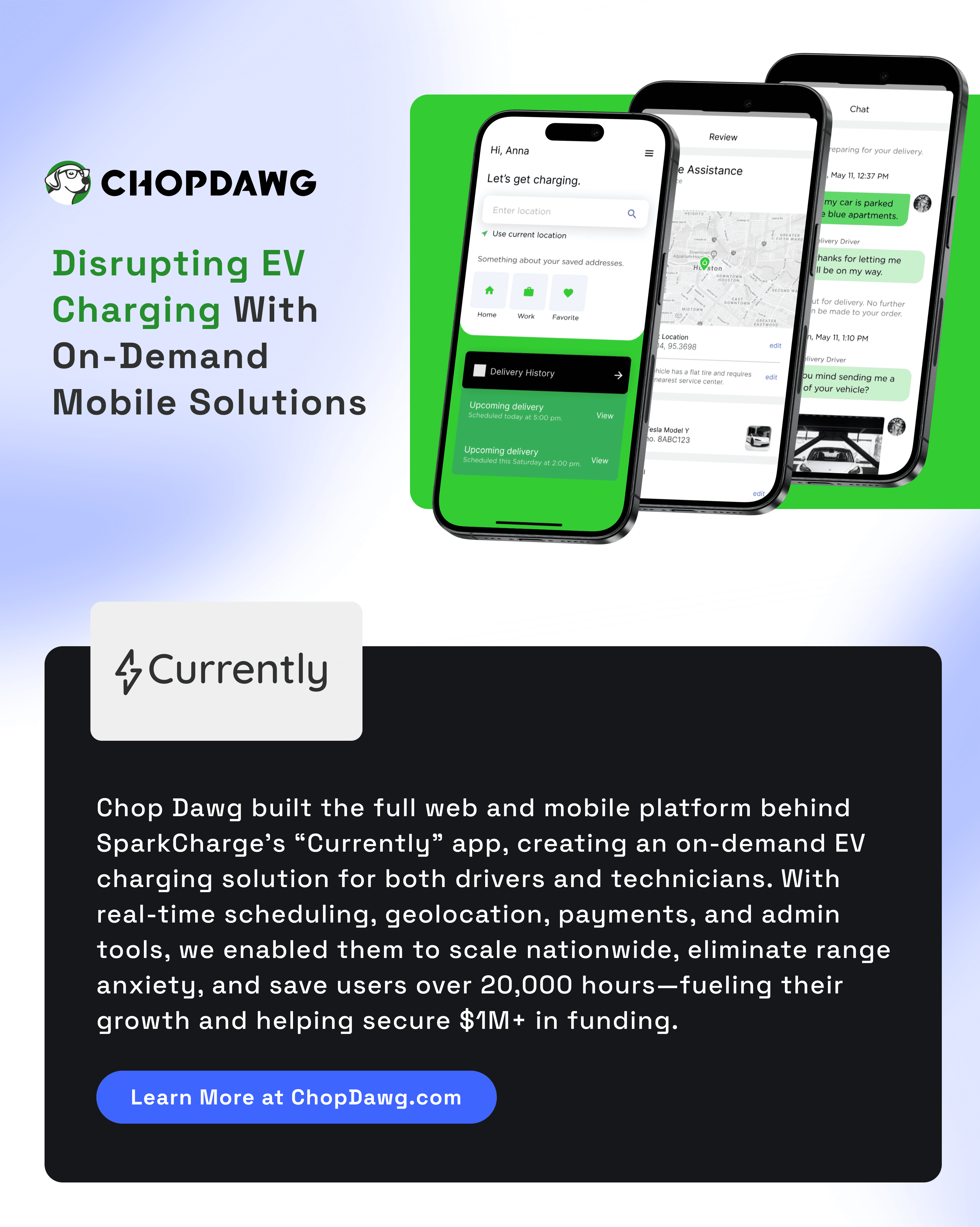
Expect engaging learner UX, safe content delivery, and data workflows across mobile and web, plus payments, subscriptions, messaging, analytics, and OAuth. Security practices align to HIPAA/GDPR/SOC with encryption and least privilege access. Delivery runs through weekly Zooms, daily Slack, and Jira sprints, with post launch maintenance options.
Best for: Founder led, VC backed edtech teams needing fast MVPs and transparent budgets.
Key Services: Custom LMS, virtual classrooms/streaming, assessments, AI tutoring, analytics dashboards, student/teacher portals, integrations, role based admin, payments, notifications.
Engagement Snapshot: 1 to 4 months for MVP; $25k to $50k typical; weekly Zooms, daily Slack, Jira sprints; optional maintenance from ~$2.5k/month; post launch bug fix window and SLAs.
10. Mercury Development
Mercury Development is a mobile first shop with 25+ years of shipping polished apps across iOS, Android, web, desktop, and wearables. Their education adjacent track record, including gamified learning, simulations, and large event companions, translates well to skill building, credentialing, and campus experiences.
With 1,500+ shipped apps serving 40M+ users, they back delivery with an accessibility practice and bi weekly demos for transparency. Healthcare work signals strong security and privacy muscles (HIPAA), while AI/ML and analytics unlock personalization and outcomes tracking when you’re ready to scale.
Best for: Higher ed teams and EdTech startups needing polished, mobile first learning apps.
Key Services: Custom iOS/Android learning apps, gamified simulations, event companion apps, assessments, accessible UX, analytics, API/SDK integrations, payments/subscriptions.
Engagement Snapshot: 6 to 10 weeks for MVP; ~$50k to $150k typical phase 1; bi weekly sprint demos; end to end delivery; optional post launch support and maintenance with a versioned roadmap.
How to Make the Final Choice
Create a short scorecard and require every candidate to answer the same questions. This keeps selection for education app development services objective and fast.
Checklist
Show two similar education builds with links or demos
Explain how the team meets FERPA, COPPA, GDPR, and WCAG targets
Provide an architecture diagram and a data flow that includes integrations
Share a week by week plan that ends with a pilot release
Clarify ownership of source files, design assets, and accounts
Offer a maintenance path with measurable response times
If your timeline is tight and you want a design led build with weekly demos, add Bricks Tech to your shortlist.
Conclusion
The right education app development services combine design clarity, secure architecture, LMS and SIS interoperability, and a bias to ship. Look for partners that think like product owners, handle compliance from day one, and commit to a tight, test heavy timeline. Bricks Tech brings a founder friendly process that builds fast without sacrificing quality. Ready to move from idea to pilot in weeks, start here at Bricks Tech.
FAQs
What types of projects fit education app development services best?
MVPs for course delivery, marketplaces for tutors, internal training tools, assessment platforms, and AI enhanced study companions are strong fits. Teams often start with core flows then expand based on learner feedback.
How long does a typical MVP take with education app development services?
A focused MVP usually launches in 4 to 8 weeks depending on scope, integrations, and accessibility requirements. A pilot release after a small user test helps validate before a full rollout.
What compliance items should be non negotiable?
At minimum plan for FERPA and COPPA in the United States, GDPR if you have EU learners, WCAG 2.1 AA accessibility targets, and security logging aligned with SOC 2 controls.
Can no code and low code scale for education?
Yes when paired with good architecture. Many teams use no code for front end speed and add custom services for performance critical paths. With a modular design you can scale parts that grow without a full rebuild.
How much should I budget for education app development services?
Expect 10 thousand to 25 thousand for a lean MVP, 25 thousand to 80 thousand for mid scope builds, and higher for complex multi tenant platforms with strict compliance. Add ongoing costs for hosting, monitoring, and maintenance.
Which integrations matter most for education apps?
Common needs include LMS connectivity via LTI, content standards like SCORM or xAPI, secure payments, identity and SSO, email and SMS, and analytics for engagement and outcomes.