Explore IoT app development services in 2026: tech stacks, partner selection, security, edge AI, and top companies. Read the founder’s guide and start your MVP.
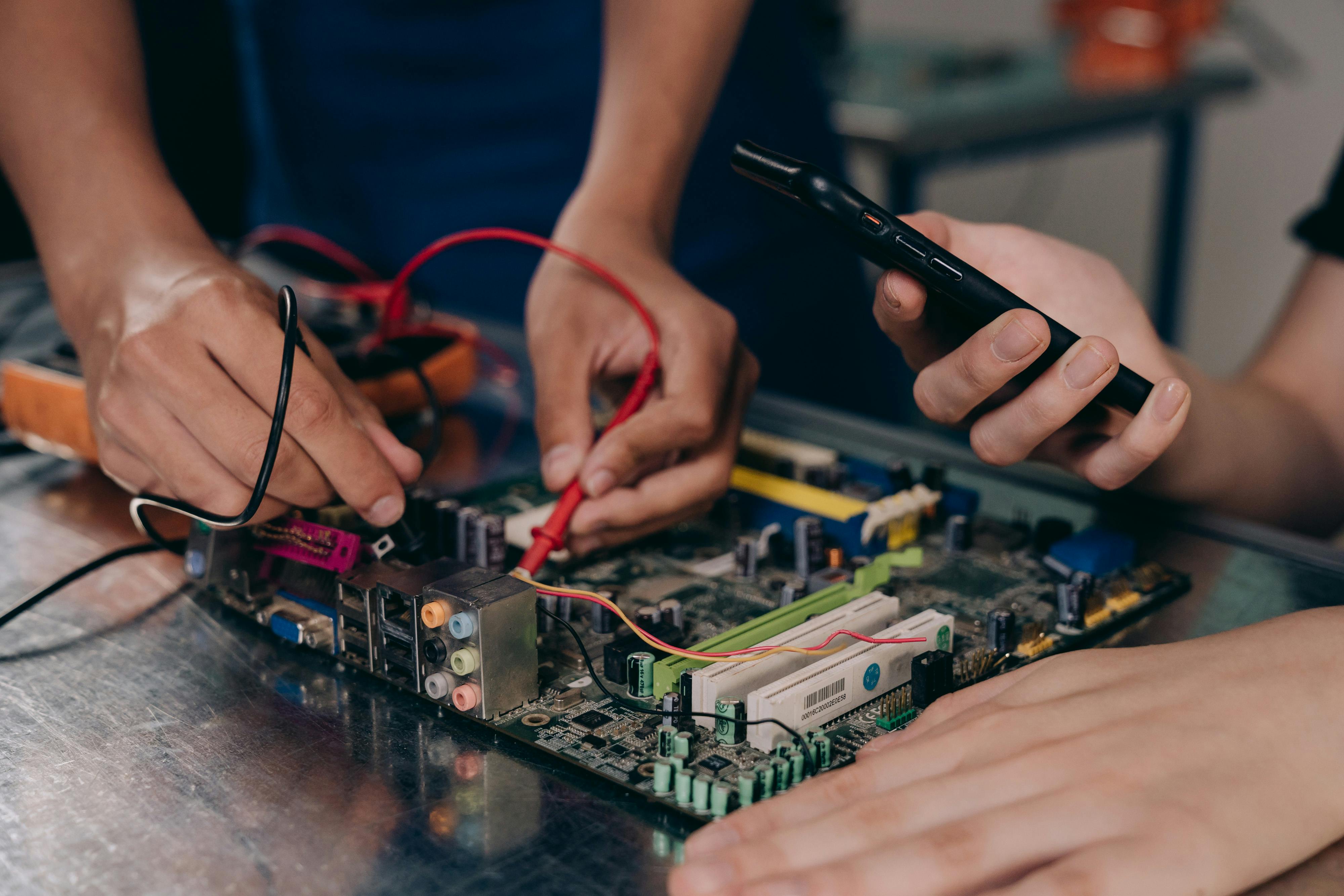
Smart devices are only as useful as the applications and cloud infrastructure that power them. IoT app development services cover everything from connecting devices to secure clouds to building the mobile and web experiences users touch every day. These services typically include product scoping, UX design, backend and frontend development, data pipelines, analytics, automations, AI integrations, and ongoing maintenance.
This guide explores the essential capabilities of IoT partners, from device connectivity to cloud architecture, and shows you how to choose a company that can help you launch and scale your connected product.
The Modern IoT Technology Stack
A strong partner for IoT app development services should be comfortable across the full technology stack. A project’s success depends on thoughtfully architecting each layer.
Device and Edge Layer
This layer includes the physical hardware and the software running on or near it.
Connectivity and Protocols: Your choice of connectivity impacts battery life, range, and cost. While Wi Fi and BLE are common, many projects require protocols like Cellular (LTE M, NB IoT), LoRaWAN, or Zigbee for long range, low power applications. Your partner should handle various data ingestion patterns including MQTT, HTTPS, and WebSockets.
Device Provisioning and Identity: Securely onboarding a device to the network is critical. This involves provisioning unique credentials and identity certificates to each device to prevent unauthorized access from the very first connection.
Edge Computing and AI: Processing data on or near the device reduces latency and cloud costs. Edge frameworks allow for running logic locally, enabling offline functionality and faster responses. This is also where AI on device (TinyML) is emerging, allowing for real time anomaly detection without a round trip to the cloud.
Firmware and OTA Updates: Full service firms often handle embedded software development and provide secure Over The Air (OTA) updates to keep devices patched, secure, and functional in the field. This is a core part of device lifecycle management.
Cloud and Data Layer
The cloud is the central brain of an IoT system, responsible for processing, storing, and analyzing data.
Platform Expertise and Architecture: A key decision is whether to build on a managed platform like AWS IoT Core or Azure IoT Hub, or buy a more specialized platform. Your partner needs deep knowledge of major providers. The architecture must support data ingestion at scale using stream processing services, ensuring data is routed efficiently to databases and analytics engines.
Scalability, Reliability, and DR: A robust cloud architecture plans for growth and failure. This means using scalable data stores, building in redundancy across multiple availability zones, and having a clear disaster recovery (DR) plan to ensure high uptime.
Data Architecture and Digital Twins: Partners must design multi tenant data models that are secure and cost effective. Creating virtual models of physical devices, or digital twins, allows for simulation, monitoring, and predictive maintenance without interacting with the physical hardware.
Application and Intelligence Layer
This is the layer where users interact with the system and where data becomes valuable.
App Experiences: This includes developing mobile apps and responsive web dashboards with fast charts, device controls, role based access, and alerts. A great user onboarding experience is crucial for consumer IoT, while industrial apps need clear, actionable data.
Automation and AI: This involves building rules engines, scheduled jobs, and AI agents that summarize telemetry or triage alerts. For instance, a partner might use n8n with LLMs such as ChatGPT or Claude to automate business processes triggered by IoT events, turning raw data into insight.
Security and Compliance: A holistic approach to security is non negotiable. This includes encrypted transport, secure credential storage, audit logs, and least privilege access. Adherence to standards like ISO 27001 or regulations (e.g., HIPAA for healthcare, GDPR for data privacy) is often required.
Lifecycle and Operations
A successful IoT product requires a plan for its entire life, from development to decommissioning.
Development Phases and Gating: Projects should move through clear phases: prototype, MVP, pilot, and full production. Each phase should have clear gates and success metrics before proceeding to the next, managing risk and investment.
Testing and Reliability: A robust testing strategy includes unit tests, device emulators, hardware in the loop testing, and canary releases. A weekly demo cadence helps catch issues early and keeps the project on track.
Observability and KPIs: Once deployed, you need to monitor the health of the entire system. This means tracking key performance indicators (KPIs) for device uptime, message latency, application performance, and user engagement.
Maintenance and Iteration: IoT app development services should always include post launch updates and support. A reliable partner offers clear maintenance plans with guaranteed response times for bug fixes and feature enhancements.
How Industries Use IoT: Key Use Cases
Choosing a specialist for IoT app development services helps teams move faster with less risk. Here is how different sectors benefit:
Healthcare: Remote patient monitoring devices that track vital signs, smart hospital beds that report on patient status, and connected inhalers that monitor usage patterns.
Manufacturing (IIoT): Predictive maintenance sensors that identify when machinery needs service, automated quality control systems, and asset tracking on the factory floor.
Logistics and Transportation: GPS and sensor based fleet management to monitor vehicle health and location, smart cargo tracking for supply chain visibility, and real time traffic management systems.
Smart Homes and Buildings: Connected thermostats, lighting, and security systems that improve energy efficiency, convenience, and sustainability.
Retail: Smart shelves that track inventory in real time, beacons for in store customer engagement, and automated checkout systems.
Top IoT App Development Companies: A Comparison
Finding the right partner depends on your specific needs, industry, and project scale. Below is a comparison of several top companies, each with different strengths.
Company | Specialty | Target Industries | Key Strengths |
|---|---|---|---|
Intellectsoft | End to End IoT & Digital Transformation | Retail, Healthcare, Logistics, Automotive | Deep stack (firmware to cloud), rapid prototyping, strong security (ISO 27001). |
Yeti | Design Led Companion Apps | Health & Wellness, Consumer Hardware | Expertise in BLE reliability, user centered design, and agile sprint delivery. |
Bricks Tech | Rapid MVP & Dashboard Development | Startups, SMBs, Marketplaces | No code and low code acceleration, 4 to 8 week MVP, transparent pricing. |
Appinventiv | Enterprise Scale IoT Solutions | Logistics, Healthcare, Smart Homes | Strong enterprise experience, AI integration, and cloud native architecture. |
Softeq | Hardware and Software Solutions | Industrial, Consumer Electronics | Offers both hardware engineering and software development for custom IoT solutions. |
Itransition | IoT Analytics & Cloud Platforms | Healthcare, Automotive, Smart Retail | Strong focus on turning large scale IoT data into actionable business intelligence. |
Computools | Custom Software & AI Integration | Finance, Retail, Energy, Manufacturing | Partners with businesses to deliver AI solutions, MVP development, and IoT software services. |
1. Intellectsoft
Intellectsoft is a US headquartered digital transformation consultancy with a dedicated IoT Lab. They deliver end to end software, from firmware and connected apps to device management and cloud integration. Known for rapid prototyping, edge AI, secure OTA, and rigorous security, they serve retail, healthcare, logistics, and automotive sectors.
Full stack IoT, from on device intelligence to fleet dashboards, hardened for security and built for scale.
Why it stands out
Speed to MVP: Rapid prototyping and iterative delivery that compresses timelines.
Depth of stack: Firmware, apps, and cloud, with AWS, Azure, and GCP fluency.
Security first: PKI, strong authentication, and ISO 9001/27001 practices.
Proof in the field: A California smart fridge manufacturer hired Intellectsoft to re platform its Android app and unify peripherals. The team delivered remote monitoring, secure OTA updates, and RFID based checkout. This improved the user experience and simplified fleet operations. Case.
How to engage: They offer fixed pricing for MVPs (typically four to twelve weeks) and flexible retainers for iterative work.
2. Yeti
Yeti is a San Francisco product design and development studio focused on companion apps and cloud software for connected devices. Their strength lies in rock solid BLE, rapid prototyping, and user centered product thinking delivered in tight sprints. They primarily support health, wellness, consumer hardware, and energy monitoring.
Where dependable device pairing meets delightful UX, so your hardware feels effortless to use.
Why it stands out
BLE reliability: Deep GATT expertise to stabilize pairing and data flows.
Design led delivery: Research to release UX that reduces churn and support load.
Sprint cadence: Time boxed work that preserves velocity and visibility.
Proof in the field: Droplette, a connected skincare device maker, faced unreliable BLE issues. Yeti rebuilt the app in React Native, restored dependable communication, and added features like guided onboarding and a regimen builder on AWS. The result was consistent pairing and a return to public beta. Case: Droplette.
How to engage: Yeti often uses a fixed price for a 30 day MVP, followed by time boxed sprints for broader work. Timelines for an MVP range from 8 to 16 weeks.
3. A Spotlight on Agile IoT Development with Bricks Tech
For founders and startups, speed to market and capital efficiency are paramount. Bricks Tech is a design led product studio that ships production apps fast. While their expertise is rooted in no code and low code web applications, their process is highly relevant for the application layer of many IoT projects, especially for dashboards, device control, and data driven workflows.
Speed to Market: Bricks Tech targets a 4 to 8 week MVP, supported by a time boxed plan and weekly demos.
Lower Upfront Risk: The flagship Build From Scratch package is priced at 10,000 and the first week is fully refundable, which de risks fit and alignment.
Proven Execution: Portfolio results include a marketplace launching in about 7 weeks and reporting 15,000 in revenue in its first month. A Clutch review from 2025 cites strong schedule management for a complex build.
Integrated Stack: With experience across 100 plus API integrations, AWS and Supabase backends, and an AI first toolchain, they can reduce glue work and accelerate delivery of IoT dashboards and admin panels.
How to Choose the Right IoT App Development Partner
Use this checklist when shortlisting companies for IoT app development services.
Match to Your Stack: Ask which clouds and protocols they use, how they handle device provisioning, and what their data architecture patterns look like.
Evidence of Speed and Outcomes: Look for concrete timelines and numbers. For example, Bricks Tech publishes a 4 to 8 week MVP plan and public portfolio metrics.
Process Clarity: Confirm the scoping process, Figma deliverables before the build, testing approach, and release practices. A design first workflow cuts surprises.
Security and Compliance Posture: Request details on authentication, key management, data isolation, and audit logs. Ask about their experience with relevant compliance standards like HIPAA or GDPR.
Scalability and Reliability Plan: How will the solution scale to thousands or millions of devices? What is their approach to disaster recovery and uptime?
Maintenance and Support: Ensure the services include post launch coverage. For example, Bricks Tech offers a 1,500 per month plan with a 24 hour response time.
Pricing and Risk Reduction: Transparent packages reduce uncertainty. The Bricks Tech refundable first week is one example of risk reduction.
Fit for Integrations and AI: Ask for examples of API integrations and AI agents. A modern partner should be able to wire AI to triage alerts or enrich device data.
For a quick gut check, request a free 30 minute consultation and ask the partner to outline a two month roadmap with milestones and demo dates. You can do that now with Bricks Tech here: book a free consultation.
Who You’ll Work With: Types of IoT Developers on a Project
An effective team for IoT app development services is cross functional.
Product Manager: Aligns business goals with scope and drives weekly demos.
UX and UI Designer: Produces high fidelity Figma flows and screens.
Cloud and Backend Engineer: Implements the data model, messaging, APIs, and auth. At Bricks Tech this often means AWS with Supabase for real time features.
Frontend Web Engineer: Builds responsive dashboards with charts and controls.
Mobile Engineer: Delivers iOS and Android experiences for monitoring and control.
Data and AI Engineer: Shapes telemetry for analytics and uses AI agents to summarize anomalies.
QA Lead: Plans test cycles, device emulation, and release checks.
Automation Engineer: Uses tools such as n8n to integrate third party services.
Hardware or Firmware Partner: If custom firmware is needed, an external specialist may join the team.
Conclusion: Work with Top IoT Developers to Ship Production Ready Apps
The right IoT app development services help you connect devices, turn raw telemetry into insight, and put polished apps in user hands quickly. As IoT evolves in 2026, trends like AI at the edge, comprehensive digital twins, and verifiable data governance are becoming standard. Whether you need a full service partner for a complex industrial project or an agile studio to build a data dashboard, focus on partners who prioritize clear communication, transparent processes, and proven outcomes.
Bricks Tech combines a design first workflow, weekly demos, an AI enabled toolchain, and transparent packages to reduce risk and accelerate results for the application layer of IoT. Facts back the approach, including a 4 to 8 week MVP target, a fully refundable first week, and a maintenance plan with a 24 hour response time.
Ready to move from concept to a working IoT app? See how the team builds fast and keeps quality high. Get started with Bricks Tech.
FAQ
What are IoT app development services?
They are end to end offerings that plan, design, build, and maintain IoT solutions. This includes device connectivity, cloud backends, dashboards, mobile apps, analytics, automations, and support.
How long does an IoT MVP usually take?
With a focused scope, many teams can deliver in 4 to 12 weeks. Bricks Tech structures projects with weekly demos to maintain a 4 to 8 week cadence for the application part of the project.
How much do these services cost?
Pricing varies by scope and complexity. Key cost drivers include hardware choices, cloud consumption, and the number of custom application features. Bricks Tech lists a Build From Scratch package at 10,000 for an 8 week build and a maintenance plan at 1,500 per month.
Can no code or low code work for IoT?
Yes, especially for dashboards, internal tools, admin portals, and business logic. Bricks Tech uses Bubble, Supabase, AWS, and n8n to move fast, then adds custom code where needed for performance or unique features.
What is edge computing?
Edge computing is a strategy that involves processing data near the source of its generation (the IoT device) rather than sending it to a centralized cloud. This reduces latency, saves bandwidth, and enables offline functionality.
How do you handle security and compliance in IoT?
A solid partner enforces encrypted transport, strong device identity, role based access, audit logs, and environment separation. They should also have experience with industry specific compliance like HIPAA or data privacy regulations like GDPR.
What tech stack do you use?
Bricks Tech commonly uses AWS for cloud services, Supabase for authentication and real time data, Bubble for rapid frontends, and n8n for automations. AI agents with ChatGPT or Claude can summarize alerts or route issues. For next steps, talk to the team.