Searching for an MVP App Development Company? Compare 15 top partners for 2026—timelines, costs, tech stacks, and proof. Pick yours and launch fast. Start now.

Early users expect polished experiences, budgets are tight, and AI is changing product scope every week. In 2025 the right mvp app development company can be the difference between traction and runway burn. The goal is speed with quality, so you can validate value quickly without overbuilding.
Founders want short cycles, visible progress, and clear ownership. A strong partner gives you a design first plan, weekly demos, and a predictable path to launch. If you want a quick gut check or to sanity test your scope, you can start with a free consult from a founder friendly studio like Bricks Tech.
What is an MVP and when to hire an mvp app development company
An MVP is the smallest product that reliably delivers the core value promise to a defined user. It is not just a prototype, it is a real product you can ship and learn from. An MVP must be viable, meaning if it’s too minimal to solve a user’s problem, it’s not a true MVP. Hire an mvp app development company when you need to:
Validate a market in weeks, not quarters
Translate fuzzy scope into a crisp Figma plan
Connect many APIs, especially payments, auth, and data
Add AI features like chat, workflow, or agent actions without building a custom stack
Facts founders care about:
Bricks Tech ships typical MVPs in 4 to 8 weeks, supported by weekly demos and regular check ins
The Build From Scratch package is 10,000 for an 8 week build and the first week is fully refundable
Maintenance is available at 1,500 per month with a 24 hour response time
If you want a quick timeline and budget read on, or jump to a consultation with Bricks Tech.
How MVP projects differ from traditional builds
Traditional builds optimize for breadth and scale. MVP work optimizes for learning speed and well chosen depth. Key differences:
Requirements evolve in response to user feedback, so the process must be time boxed and demo driven
Design comes first to reduce rework, high fidelity Figma wireframes let you see the product before writing logic
Tooling choices favor leverage, not reinvention, for example Bubble for front end and workflow, Supabase for auth and data, and n8n for automations
The best mvp app development company exposes tradeoffs early, for example workload based pricing on some platforms or when to offload data to external stores
A design led and AI first toolchain can reduce bugs and shorten cycles. Bricks Tech commonly integrates 100 plus APIs and AI tools like ChatGPT and Claude across Bubble, AWS, Supabase, n8n, and Framer.
Types of MVP Development Services & Methodologies
Not all MVPs are fully coded applications. Depending on your goal, budget, and timeline, different approaches can validate your idea. These methodologies are often categorized as either low fidelity (cheaper, faster, for testing concepts) or high fidelity (more functional, for testing user behavior).
Single Landing Page MVP
This approach involves creating a single web page that clearly explains your product’s value proposition. The goal is to gauge interest by collecting email signups or pre orders from potential customers. It’s a fast and inexpensive way to see if anyone wants what you’re building before you build it.
Explainer Video MVP
An explainer video demonstrates how your product works and the problem it solves, often before the product exists. Dropbox famously used this strategy with a simple video that drove thousands of signups overnight, proving market demand without a single line of code.
Concierge & Wizard of Oz MVPs
With a Concierge MVP, you manually deliver the service to your first customers. This high touch approach provides deep insights into user needs because you are interacting with them directly. In a Wizard of Oz MVP, the front end looks like a fully automated product, but humans are manually carrying out the functions behind the scenes. The key difference is user awareness, in a Concierge MVP, the user knows a human is involved, while the Wizard of Oz is hidden.
Piecemeal MVP
A Piecemeal MVP involves stitching together existing third party tools and services to create the first version of your product. This saves significant development time and money by leveraging platforms that already exist, allowing you to focus on the unique aspects of your offering.
Single Feature MVP
This type of MVP focuses on building and launching only one core feature that solves a specific and critical problem for users. Instagram, for example, started simply as an app for sharing filtered photos. By nailing one feature perfectly, you can validate your core assumption and build momentum for future development.
Software Prototype & Code Based MVPs
A software prototype is often a clickable, interactive model of your app (built in tools like Figma) that simulates the user experience without full functionality. It is used to gather feedback from stakeholders and test user flows. A code based MVP is a functional, shippable application with the core features necessary to solve the primary user problem. This is what most people think of as an MVP, a real product that can attract early adopters and validate market demand.
White Label MVP Development
For some startups, a white label solution can be a faster alternative to a custom MVP. This involves taking a pre built, market tested platform and customizing it with your branding. It can reduce time to market from months to just a few weeks, offering a cost effective way to launch a proven solution.
How to Prioritize Core Features for Your MVP
Feature creep is the enemy of a fast, effective MVP. A structured prioritization framework is essential to avoid overbuilding. The MoSCoW method is a popular technique for categorizing features.
Must Have: These are non negotiable features critical for the product to function. Without them, the MVP fails.
Should Have: These features are important and add significant value but are not essential for the initial launch.
Could Have: These are desirable features that would be nice to include if time and resources permit, but their absence won’t impact the core user experience.
Won’t Have: These are features that are explicitly excluded from the current scope and are saved for future versions.
By forcing disciplined choices, this framework keeps the scope lean and focused on solving the most critical user problem first.
How to evaluate MVP partners, criteria and due diligence
Use criteria that index on proof and process, not only portfolio visuals.
Outcomes: look for shipped apps and numbers, for example WNTAD reported 15 thousand dollars revenue in month one, NeighborGood reported 10 plus donations in month one, Taraki reports 100 thousand plus signups and 50 thousand plus monthly job applications. See the Bricks Tech projects.
Social proof: verified client reviews matter, Bricks has two 5.0 out of 5.0 reviews on Clutch including a 2025 review from the CEO of BucketMatch that cites 25 plus features shipped in about 10 months
Transparency: ask for a week by week plan with visible milestones and acceptance criteria
Communication: weekly demos and a single source of truth for scope are non negotiable
Team model: global coverage can blend cost and quality, Bricks Tech lists leadership in Toronto and a technical team in Lahore with a global mindset that includes Singapore
Tech approach: confirm comfort with no code and low code plus full stack where needed
An mvp app development company that shows real metrics, not only mockups, is usually a safer bet.
Our Ranking Methodology for MVP Development Companies
To provide a clear and useful list, we evaluated companies based on criteria that matter most to founders and product leaders. Our methodology prioritizes proven results and a transparent process over flashy presentations.
Verified Client Feedback: We analyzed reviews on platforms like Clutch, looking for consistent praise regarding communication, timeline adherence, and product quality.
Founder Focused Process: We favored partners who offer structured, founder friendly engagement models. This includes design first workflows, weekly demos, clear ownership handoffs, and transparent pricing.
Technical Versatility: The best partners master a modern toolchain. We looked for expertise in both rapid development platforms (like Bubble and Webflow) and scalable backend technologies (like Supabase and AWS), including AI and API integrations.
Proven Outcomes: We prioritized companies with case studies that show tangible business results, such as revenue, user signups, or funding raised post launch.
This approach ensures the ranked companies are not just skilled builders but true strategic partners for early stage ventures.
Understanding MVP Timelines and Costs
While every project is different, understanding typical ranges for timelines and costs helps set realistic expectations.
How Long Does It Take to Build an MVP?
The timeline for MVP development can vary significantly based on complexity and industry.
Simple Apps (e.g., single feature, basic tools): 1 to 3 months is a common estimate.
Mid Complexity Apps (e.g., e-commerce, consumer apps): Typically range from 3 to 6 months.
Complex or Regulated Industries (e.g., Fintech, Healthcare): These often require 6 to 12 months due to compliance and security needs.
Many agencies follow a phased approach, with discovery and planning taking 1 to 2 weeks, followed by design, development, testing, and launch. A focused partner using agile methods can often deliver an MVP in 4 to 8 weeks.
How Much Does an MVP Cost?
MVP development costs can range widely, from under $10,000 to over $150,000.
By Solution Type: A simple application MVP might cost between $10,000 and $50,000. More complex solutions with multiple integrations can range from $35,000 to $150,000 or more.
By Industry: Building an MVP in a highly regulated industry like Fintech can be more expensive. A basic Fintech MVP might start around $30,000 to $70,000, while more complex platforms can exceed $150,000.
Factors like design complexity, technology stack, and the development team’s location all influence the final cost.
MVP App Development Company Comparison Table
Company | Ideal For | Typical MVP Timeline | Estimated Cost | Key Strengths |
|---|---|---|---|---|
Pre seed and seed founders needing speed and budget certainty. | 4 to 8 Weeks | $10,000 | Refundable first week, design first, AI integration. | |
Startups prioritizing polished UX and modern JavaScript stacks. | 12 to 16 Weeks | $30,000 to $60,000 | Rapid prototyping, full stack JS expertise. | |
Venture backed founders in regulated fields like fintech. | 4 to 6 Months | $50,000+ | Disciplined discovery, enterprise grade security. | |
Founders who want reliable timelines and full code ownership. | 10 to 12 Weeks | $10,000+ | 92% on schedule delivery, flexible engagement. | |
Teams needing rigorous product strategy and senior talent. | 4 to 8 Weeks | $10,000+ | MVP shaping sprints, deep Rails expertise. |
MVP App Development Company: Top 15 Picks
Building on the criteria we just covered, this section highlights 15 partners who specialize in taking early stage ideas to market ready MVPs with speed and discipline. They’re grouped for their repeatable MVP processes, startup friendly collaboration, and proven results across platforms and industries. Use this shortlist to quickly spot teams that fit your timeline, budget, and product scope.
1. Bricks Tech
Bricks Tech is a design led, MVP first studio serving startup founders and SMBs that want a working product fast, without losing sight of UX polish or runway. Blending no code with selective custom engineering from Toronto, Lahore, and Singapore, they’re a match when you need cost certainty, tight feedback loops, and clear ownership.
Speed snapshot: prototype in 2 to 3 weeks; MVP in 4 to 8 weeks. Weekly demos, sprint by sprint QA, and daily check ins.
Build playbook: Discovery and scoping set vision, budget, and feasibility in 1 to 2 weeks. High fidelity flows in Figma follow (2 to 3 weeks), then Agile build cycles (3 to 6 weeks) with acceptance criteria, staging, and usage tracking. After launch, they iterate quickly, deploy, and hand off with transparent documentation.
Pricing & engagement: Fixed “Build From Scratch” MVP at $10,000 for an 8 week build (first week refundable). “Your Team” retainer for ongoing work with no lock ins. Maintenance runs $1,000 to $1,500/month with a 24 hour response time. A pod typically includes PM, designer, 1 to 3 developers, and QA; work happens in timezone aligned cadences with weekly demos.
Tech & proof: Bubble for rapid delivery, Figma for UX, Supabase for auth/storage, AWS for hosting; 100+ API/AI integrations including Twilio and SendGrid. Launches include WNTAD (7 weeks, $15k first month revenue) and NeighborGood (live in 6 weeks, 10+ donations in month one), plus BucketMatch and ZeroHub.
2. Purrweb
Purrweb operates as an MVP first, full stack product studio for startups and SMBs that prioritize velocity, polish, and modern JavaScript. With U.S./UAE presence, they combine design led thinking and cross platform builds, ideal when you want a clickable prototype quickly and a measured path to a shippable app.
Speed snapshot: clickable prototype in about 72 hours; MVP in 12 to 16 weeks. Bi weekly demos and continuous QA.
Build playbook: Get a free estimate in 48 hours and kickoff in 24. A brief market and competitor scan refines scope; UX logic maps and a rapid prototype set direction. Expect about 4 weeks of design, 9 to 10 weeks of development, and 2 to 4 week sprints with end of sprint demos and clear rollback criteria.
Pricing & engagement: Typical MVPs cluster around $30k to $60k (many near about $45k). Public rates appear as $25 to $49/hr (Clutch) and $50 to $99/hr (Techreviewer), with minimums from $5k to $25k. Time and materials is standard, fixed scope available. A core squad includes PM, UI/UX, React/Node engineers, and QA, with maintenance SLAs set per contract.
Tech & proof: React Native, React.js, Node.js/Nest.js, Electron; Flutter as needed. Infra spans PostgreSQL, Redis, AWS, Nginx, Jenkins, Vercel, WebRTC. Payments via Stripe and Lemonway; experience navigating EU restrictions. Track record: Bricks scaled to 400,000+ users; Kem raised $1M post MVP; 11+ years and 550+ projects shipped.
3. OAK’S LAB
OAK’S LAB partners with venture backed founders and growth stage SMBs from zero to MVP and beyond, using disciplined discovery and a stable, cross functional team. Their TypeScript forward approach fits fintech, cybersecurity, edtech, and regulated plays where speed, evidence, and scalability must coexist.
Speed snapshot: Foundation in 2 to 8 weeks; focused MVP in about 4 to 6 months. Weekly demos, UAT every sprint.
Build playbook: Start with Foundation: research, interviews, problem framing, clickable prototype, and a clear MVP roadmap across 2 to 4 discovery sprints. Delivery follows dual track agile in two week increments with QA and UAT each sprint, tight instrumentation, and ongoing optimization after launch.
Pricing & engagement: Minimum projects from $25,000+; typical $50 to $99/hour with many totals $200k to $999k; monthly packages around about $31.1k. Choose an autonomous team or targeted augmentation. US/EU time zone overlap, full client IP, and ISO 27001 backed practices; pods usually include PM, designer, 1 to 3 engineers, and QA.
Tech & proof: TypeScript (React/Next, React Native, Node) with Python, GCP, PostgreSQL, Docker, GitHub CI/CD, Sentry. Integrations include Stripe, Postmark, SendGrid; analytics with Mixpanel, Datadog, GA, Hotjar; AI via Vertex, OpenAI, Hugging Face, Llama, Claude. Results: CMG covers 140+ buy side/$40T+ AUM; Sett cut creation time about 80%; VDC recovered $300k in month one.
4. Voypost
Voypost is a Berlin based, MVP first builder for web and mobile across telehealth, fintech, real estate, and education. They balance end to end delivery with staff augmentation, emphasizing transparency, code ownership from day one, and reliable timelines. This is handy when a founder wants pace without hand holding surprises.
Speed snapshot: ballpark in 3 business days; MVP in about 10 to 12 weeks. 92% of 50+ projects delivered on schedule.
Build playbook: Discovery takes 3 to 5 days, then a POC in 1 to 2 weeks, UX/architecture in 1 to 2 weeks, a prototype in 2 to 4 weeks, and an MVP around three months. Agile SCRUM/Kanban with weekly demos, daily Slack, CI/CD, continuous QA, and explicit acceptance criteria. Code lives in your repos with staging and roadmap reviews.
Pricing & engagement: Minimums from $10,000+; rates at $25 to $49/hour. Weekly demo anchored billing, flexible commitment, and scale up/down options. Teams blend PM, BA, designer, 1 to 3 developers, QA/DevOps as needed. Post launch maintenance includes SLA tiers and defined bug fix windows.
Tech & proof: React/Next/Vue/Angular; React Native/Flutter/Swift/Kotlin; Node.js, Go, Python, Java, PHP/.NET; PostgreSQL/MongoDB/Redis; Firebase/Supabase; AWS/GCP/Azure; Strapi/Contentful/Prismic; strong DevOps/CI/CD. Integrations: Stripe, OpenAI, Zapier/Make; healthcare encryption and ENISA aligned controls. Outcomes: telemedicine MVP in about 4 months (+130% patients, 14% costs); Inkly reduced codebase 25% and sped delivery +20%; Parqio, Corti; 5.0 Clutch rating.
5. Thoughtbot
thoughtbot is a 20 plus year product consultancy built for clarity and momentum. Small senior squads validate, prototype, and ship MVPs quickly, especially effective in web/mobile and regulated health tech, making them a go to when you need rigorous product thinking and speed from day one.
Speed snapshot: prototype in 2 to 3 weeks; MVP in 4 to 8 weeks. Shaping sprint and weekly demos anchor each iteration.
Build playbook: Kick off with an MVP Shaping Sprint (often after a 5 day Design Sprint) to pressure test assumptions and architecture. Two week sprints, daily syncs, weekly demos/retros, continuous QA, and explicit acceptance criteria keep the risk low and the learning high. After launch, roadmap by metrics.
Pricing & engagement: Minimums around $10k+, senior rates typically $150 to $199/hour. Time and materials with weekly reporting and budget targets; bandwidth adjusts as needed. A typical pod: PM, product designer, and 1 to 3 engineers with QA. Post launch support starts near $5k/month for maintenance and upgrades.
Tech & proof: Rails with Hotwire, React/React Native, Swift/Kotlin, Python/Django; Heroku or AWS hosting; GitHub and robust monitoring (New Relic, error tracking). Integrations: Stripe, eClinicalWorks, subscription systems. Wins include Joydrive (MVP in six weeks), Folio (200+ hotels; later a $14M Series A), and work with Harvard Business Review.
6. 10Clouds
10Clouds is a seasoned full stack studio (est. 2009) that helps founders and fintech/AI scaleups move from idea to investor ready MVP. Product Delivery Managers and cross functional squads focus on discovery, UX, and secure engineering. This is perfect when you need a clear scope and a dependable US/EU collaboration window.
Speed snapshot: clickable prototype in about 2 to 3 weeks (six weeks in some cases); mobile MVPs in about 40 days.
Build playbook: Discovery workshops align goals in 3 to 5 days; a five day design sprint validates solution direction. Wireframes and design take 1 to 2 weeks, then delivery runs in two week sprints with Jira visibility, standups, weekly demos, and continuous QA. Post launch iterations ship weekly/bi weekly.
Pricing & engagement: Minimum $25,000+; typical rates $50 to $99/hour. Choose Time & Materials or Fixed Price for bounded scopes. Teams include a PDM, Tech Lead, 2 to 4 engineers, QA, designers, and optional DevOps, with US/EU overlap. After launch, expect a maintenance handover, monitoring, cert/dependency upkeep, and tailored SLAs.
Tech & proof: React.js, Node.js, Python (Django/FastAPI), Flutter, React Native, Firebase, AWS; CI/CD with Bitrise. Integrations include Stripe, Mambu, and Airwallex, plus DevSecOps and SOC support. Outcomes: Gregory Funding prototype in six weeks; Quesmed sales +100% and 10,000+ daily students; Altruisto +22% conversion; Trust Stamp biometric/ML partnership.
7. Chop Dawg
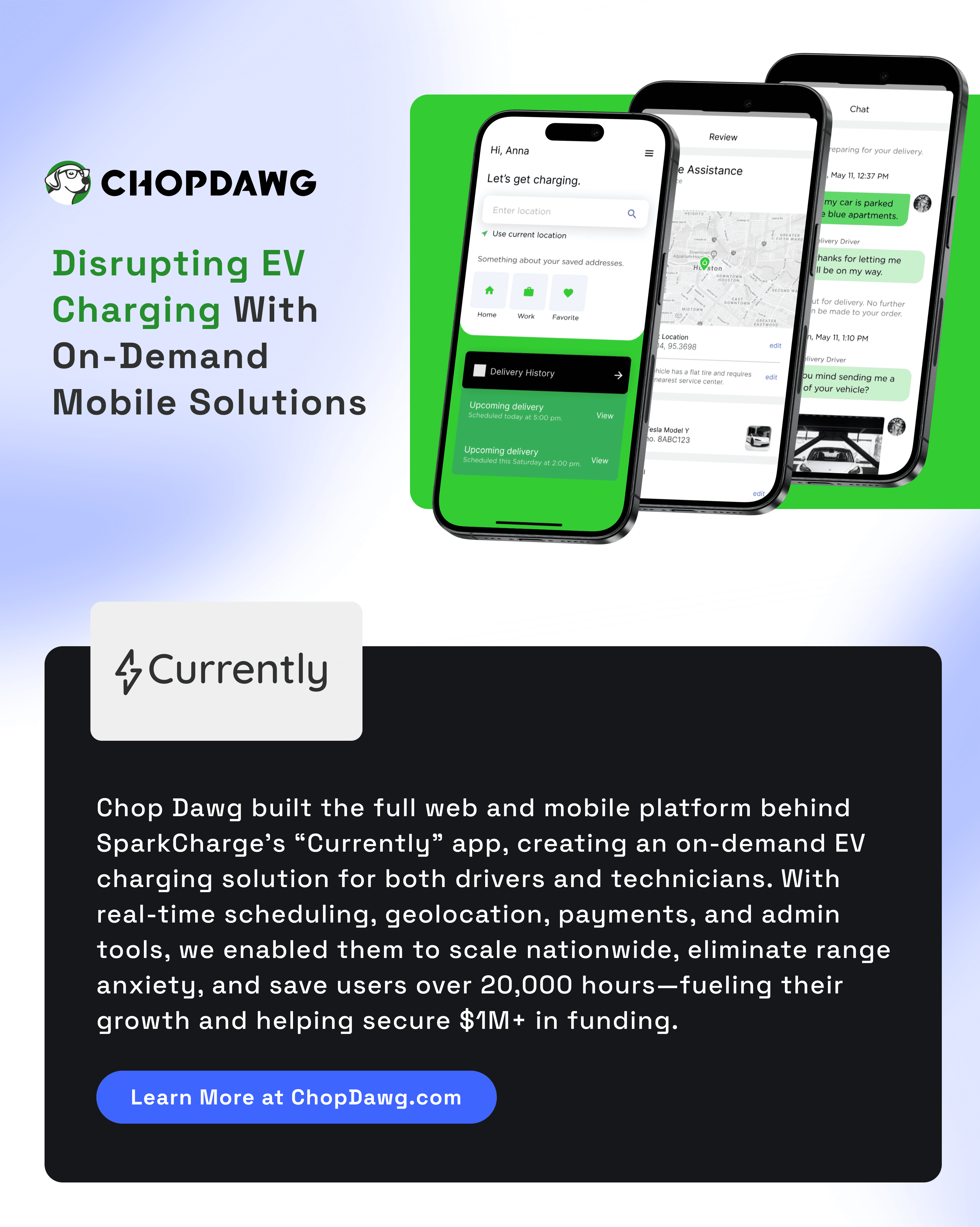
Chop Dawg is a U.S. product partner for startups and SMBs that want an MVP plan, predictable budgets, and consistent communication. Since 2009, they’ve shipped web and mobile apps with a strong MVP first lens, ideal for founders seeking speed, guidance, and a steady hand from discovery to launch.
Speed snapshot: design in 1 to 3 months; shippable MVP in 1 to 4 months; weekly Zoom demos with daily Slack updates.
Build playbook: After a free 45 minute consult, you’ll get a plan covering scope, timeline, and fixed monthly budget. UX flows and wireframes lead into interactive prototypes before engineering. QA is ongoing, app store readiness is baked in, and a post launch bug fix period keeps momentum.
Pricing & engagement: Fixed monthly pricing with scale up/down flexibility: UX/UI from $5K/mo, MVP at $7.5K/mo, maintenance from $2.5K/mo, AI features at $10K/mo. Public benchmarks show $50 to $99/hr, minimums from $1,000+, typical totals from $10K to $350K+. Retainers available; payments tie to deliverables; SLAs and response times defined.
Tech & proof: React Native, React, Node.js, Django/Python on AWS/GCP/Firebase/Azure. Integrations: Stripe, Twilio, SendGrid, Plaid. Compliance: HIPAA, GDPR, SOC 2, PII controls. Proof points: Mister Softee hit 1,000,000 downloads in three months with a 30% repeat visit lift and 35% higher ATV; Slay reached Top 10 in both stores within 24 hours, delivering 100% ROI.
8. Appinventiv
Appinventiv is a large, full stack product engineering partner (1,600+ engineers) with a dedicated MVP program that merges discovery, design sprints, and agile delivery. They suit founders and SMBs seeking fast validation with enterprise grade rigor, then scaling confidently on modern cloud.
Speed snapshot: web MVP in 6 to 14 weeks; cross platform MVP in 8 to 18 weeks. Weekly demos and two week sprints.
Build playbook: A 2 to 4 day discovery workshop locks goals, risk, and scope. A 5 day Design Sprint yields a testable prototype, and build moves in two week sprints with code reviews, developer QA, and weekly updates. Category MVPs like commerce or delivery often span 16 to 24+ weeks with bi weekly approvals.
Pricing & engagement: Minimum from $50,000; rates publicly listed at $25 to $49/hour. Engagements range from fixed price MVPs to Time & Materials and Dedicated Teams. Typical squads pair PM/Delivery with an architect, UI/UX, 1 to 3 engineers, QA, and DevOps across time zones. Post launch includes 24×7 monitoring, SLAs with proactive penalties, and structured bug fix windows.
Tech & proof: React/Next, Angular, Vue; Node/Nest, Python/FastAPI/Django, Java/Spring, .NET; Flutter, React Native, Kotlin, Swift; Postgres/MySQL/Mongo/Redis; AWS, Azure, GCP, Kubernetes, CI/CD. Integrations: Stripe, Salesforce, SAP, Databricks; AWS Advanced Partner. Compliance: ISO 27001/9001, CMMI 3, HIPAA/GDPR/PCI. Results: KFC +22% conversion and 30k+ daily orders; JobGet 2M+ downloads and a Series B; Adidas added 500k users.
9. Digital Scientists
Digital Scientists blends U.S. product leadership with nearshore delivery to move fast on AI powered MVPs, custom platforms, and modernization projects. Their sweet spot spans healthcare, logistics, and public sector. This is great when you need validation now and enterprise minded engineering next.
Speed snapshot: POC in about 4 weeks; medium MVP in about 8 weeks; larger MVPs in 12 to 16+ weeks. Weekly stakeholder demos.
Build playbook: A four phase path: Discovery clarifies the problem and users; Blueprint sets architecture, flows, wireframes, and visuals; Develop & Launch progresses in two week sprints with acceptance criteria and QA throughout; Grow focuses on optimization and scale. Example: 90 day POC leading to a nine month integrated launch.
Pricing & engagement: Transparent tiers: $35k to $50k for 4 week POCs, $75k to $125k for about 8 week MVPs, and about $200k+ for 12 to 16+ weeks. Fixed fee entry assessments from $15k. A hybrid cost plus model marries U.S. product/architecture leadership with nearshore engineering at $25 to $65/hour; market senior benchmarks at $150 to $199/hour. Pods run two week sprints with SLAs after launch.
Tech & proof: React/React Native, Angular, Swift, Node.js, Python, Rails, R; AWS/Azure/GCP; OpenAI, TensorFlow, PyTorch. Integrations: Stripe, Elasticsearch, Firebase, Twilio, SendGrid, AWS S3/EC2/CloudFront, PostgreSQL; HIPAA and FHIR/HL7 alignment. Proof: Mailchimp’s Creative Assistant generated 4,849,372 designs in eight months; GoFan MVP in about 2.5 months with 50% adoption; CommuniCare RPM in nine months.
10. F22 Labs
F22 Labs is a startup centric studio that takes founders from idea to market with an MVP first, full stack approach. With 10+ years and 125+ launches, they emphasize validation, iteration, and budget control. They are well suited to early teams seeking steady velocity and a partner mindset.
Speed snapshot: clickable prototype in 4 to 6 weeks; MVP in 12 to 16 weeks (complex integrations about 24). Weekly demos and daily async updates.
Build playbook: Discovery and roadmapping crystallize scope with specs and wireframes in 2 to 4 weeks pre code. Agile sprints (1 to 2 weeks) drive delivery with QA embedded and acceptance criteria per story. A dedicated product owner remains accessible as the team iterates after launch.
Pricing & engagement: Minimums start at $10,000; rates often $25 to $49/hour, with many MVPs landing between $10k to $50k. A starter prototype (about 10 key screens) is $1,000. Teams include PM, designer, 1 to 3 developers, and QA. Choose T&M, fixed scope, or dedicated pods (e.g., 2 month, 40 hrs/week). SLAs are set in contract.
Tech & proof: React, Next.js, Angular; Node.js, Rails, Python; React Native/Flutter; PostgreSQL/MySQL/MongoDB; AWS/DigitalOcean; Figma. Integrations: Stripe, Shopify/Hydrogen, shipping, CRM, analytics. HIPAA experience via SkyMD. Proof: SkyMD, Frank Darling, Network FP, HeyHey; HireVox screened 6,800+ candidates with a 60% time reduction; VOXI delivered 10,000+ automated calls.
11. NeoITO
NeoITO is a full stack product engineering partner helping pre seed/seed founders and SMBs ship investor ready MVPs fast. With 200+ people across the US/UK/India and 200+ products delivered, they pair rapid road mapping with crisp Agile execution and cloud native builds that scale.
Speed snapshot: wireframes in 1 to 2 weeks; prototype in 2 to 3 weeks; MVP in about 10 to 12 weeks. One week sprints, Monday demos.
Build playbook: Discovery and scoping land in 3 to 5 days, followed by UX/UI and an interactive prototype. Delivery runs in one week sprints with daily standups, retrospectives, mid week refinements, analytics instrumented releases, and continuous QA. Acceptance criteria gate each release; A/B tests drive post launch iteration.
Pricing & engagement: Minimums at $10,000+ and rates typically $25 to $49/hour. A pod often includes a Product Owner, Scrum Lead, Architect, 2 to 4 engineers, UX/UI, QA, and optional DevOps. Contracts can be sprint based T&M or fixed scope. After launch, expect managed releases, CI/CD, blue green deploys, and SLAs with defined response and escalation paths.
Tech & proof: Angular/React; Node.js, Python, Ruby, PHP; React Native/Flutter; SQL/NoSQL; Docker/Kubernetes/Jenkins/Terraform; AWS/Azure/GCP. AI with OpenAI, LangChain, Pinecone. Integrations: Stripe, Google, LinkedIn; Auth0/OAuth/JWT. ISO 9001:2015. Results: Waitwhile 5× revenue and 3× paid customers; Daily AI hit an eight figure valuation; 2M+ rides with 33% costs and about 25% faster delivery.
12. Fueled
Fueled is a high polish product agency for mobile and enterprise web, now paired with 10up’s content and platform depth. For venture backed startups and growth teams, they deliver MVPs that scale, with production ready infrastructure, clean UX, and the analytics to iterate with confidence.
Speed snapshot: product/design sprints in about 3 weeks; TestFlight/Play Store in 9 to 13 weeks from kickoff.
Build playbook: Kick off with product and design sprints to validate value and prioritize features. Cross functional squads then ship in agile sprints for 6 to 10 weeks, with weekly demos, daily Slack, and instrumentation guiding iteration. QA is continuous, with clear acceptance criteria and post launch cycles.
Pricing & engagement: Minimums typically near $75,000; prevailing senior rates $150 to $199/hour. MVP scopes often range $100k to $150k within broader $200k to $999k programs. Teams combine product and project management with 1 to 2 designers, engineers, and QA. Fixed scope or retainers available; 24/7 emergency support and proactive monitoring after launch.
Tech & proof: Swift, Kotlin, Kotlin Multiplatform, Flutter; enterprise WordPress (VIP) and modern headless stacks; AWS/Azure/Vercel. Integrations: Shopify, WooCommerce, Contentful, Sanity, Stripe; analytics via Amplitude and GA. Accessibility upgrades to WCAG 2.2. Proof: Warby Parker Virtual Try On used by 50%+ of customers; 9GAG at 3.5B monthly views.
13. Savvy Apps
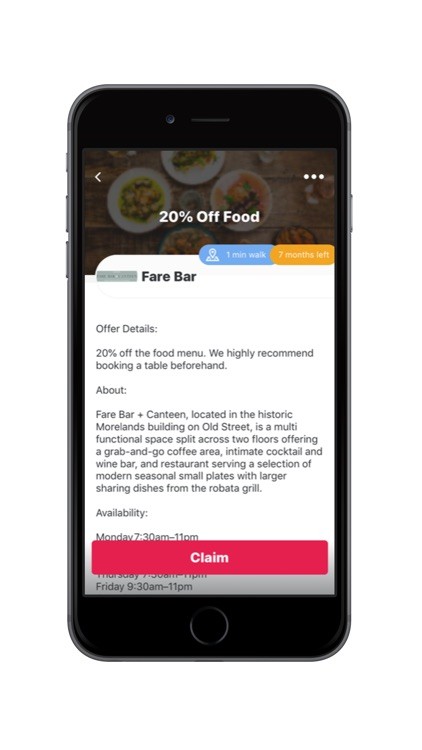
Savvy Apps built a reputation for native iOS/Android craft and launch ready MVPs with complex mobile capabilities. Best for founders and SMBs who need app store excellence over quick no code shortcuts.
Note: Savvy Apps ceased operations in 2023; its DNA continues within Modus Create’s mobile practice.
Speed snapshot: clickable prototypes in 1 to 3 weeks; native MVPs in 8 to 12 weeks. Weekly stakeholder demos standard.
Build playbook: Discovery workshops (3 to 5 days) unpack jobs to be done and the smallest viable feature set. A design sprint prototype de risks early, while engineering advances with continuous QA and acceptance gates. After launch, 2 to 4 week release trains and A/B onboarding accelerate retention.
Pricing & engagement: Historically: minimums from $25,000+ with $150 to $199/hour rates. Fixed scope MVPs commonly transitioned into month to month retainers for iteration and ASO. Typical pods: PM, UX/UI, 1 to 2 native engineers, a part time backend, and QA. Confirm current terms via Modus Create.
Tech & proof: Native iOS (Swift/Obj C) and Android (Kotlin/Java), AWS backed APIs, mobile tooling for crash/error analytics, push, and CI. Integrations include Apple Health, Fitbit, MLS, Radar geofencing, and Stripe. Clients and outcomes: PBS, NFLPA, Homesnap (acquired by CoStar for $250M), LifeFuels; Apple Editor’s Choice, Webby, and other awards.
14. Relevant Software
Relevant partners with startups, SMBs, and enterprises to validate ideas, ship investor ready MVPs, and scale with security in mind. Their discovery first posture and regulated domain fluency make them a fit when speed must align with GDPR, HIPAA, or ISO 27001 realities.
Speed snapshot: discovery in 2 to 4 weeks (6 to 8+ for complex); MVP in about 10 to 12 weeks. Two week sprints with mid sprint reviews.
Build playbook: Discovery aligns users, risks, and requirements, followed by wireframes and a clickable prototype (1 to 2 and 2 to 3 weeks, respectively). Delivery runs in two week sprints with daily standups, end of sprint demos, continuous QA, and acceptance criteria. After launch, analytics drive weekly backlog priorities.
Pricing & engagement: Time and materials with a three month minimum; typical rates $50 to $99/hour and projects from $50k to $199k. Pods combine PM, BA, UX/UI, frontend/backend, QA, and DevOps (often 7 to 10 people) with EMEA/US overlap. Options include fixed scope milestones or dedicated teams, plus support SLAs with defined response windows.
Tech & proof: React/Next/Vue; Swift/Kotlin/React Native; Node/Nest, Java, Python, .NET, PHP; AWS/Azure/GCP/Vercel; Salesforce. Compliance across GDPR, HIPAA, ISO 27001. Integrations span iBeacon, Firebase, Apple Pay/Google Pay, Amadeus RefX, Azure/MS SQL, and 3D scanning. Impact: Volkswagen 5× conversions; Össur cut orders to under five minutes; Norwegian Air 50% maintenance savings and 1M+ downloads (4.9 average rating).
15. Mercury Development
Mercury Development is a veteran mobile and software studio (since 1999) with 500+ in house engineers and 1,500+ apps used by 40M+ users. They’re a strong choice for founders and SMBs who want mobile first MVPs that can expand across web, desktop, and robust backends.
Speed snapshot: prototype in 1 to 2 weeks; first working demo by week two; alpha in 48 hours under tight scope; full release in about 4 weeks.
Build playbook: Free discovery clarifies scope and yields documentation, a UI kit, and about 25 low fi screens. Delivery proceeds in two week sprints with bi weekly demos, structured QA, and store submission support. They front load velocity without sacrificing acceptance gates or rollout safety.
Pricing & engagement: Minimums from $25,000 with public rates at $50 to $99/hour. Teams include a product/BA lead, UI/UX, 1 to 3 engineers, and QA, with specialists brought in as needed. Sprint based T&M is standard; discovery aligns scope to budget. Support plans and SLAs continue the roadmap after launch.
Tech & proof: Native iOS/Android; React Native, Flutter, Xamarin; web with React/Angular; back end in .NET, Ruby, Node, PHP, Python, Java, Go; Azure/AWS with MS SQL or PostgreSQL. Integrations include Stripe, contact sync, multi channel delivery; HIPAA/GDPR ready. Results: Dow alpha in 48 hours and full in four weeks; Fitbit scale; 50+ engineers deployed; Thnks multi vendor gifting.
The Modern Tech Stack for MVP Development
Choosing the right technology is a critical decision that balances speed, cost, and scalability.
Mobile Tech Stack for MVP
For mobile first products, the goal is often to reach both iOS and Android users efficiently. Cross platform frameworks like React Native and Flutter are popular because they allow developers to use a single codebase for both platforms, significantly reducing time and cost. For the backend, services like Supabase or Firebase provide ready to use authentication, databases, and storage, which accelerates development.
Code Based and AI MVP Development
For scalable web applications, a common stack includes React.js (or Next.js) for the front end and Node.js for the back end, often paired with a database like PostgreSQL or MongoDB.
When building an AI MVP, the process starts with defining a clear problem that AI can solve. Instead of building custom models from scratch, which is expensive and time consuming, most teams leverage pre trained models from providers like OpenAI (GPT), Google, or Hugging Face. This allows for rapid prototyping of core AI features. A good AI MVP company can help integrate these services to power features like intelligent assistants, data analysis, or content generation.
Scaling Your MVP to a Full Product
A successful MVP is just the starting point. Scaling from a validated idea to a robust, market ready product requires a strategic approach. This journey involves several key stages, including evaluation, planning, and development.
The process typically involves:
Gathering and Analyzing Feedback: Use insights from early adopters to refine existing features and prioritize what to build next.
Enhancing the User Experience (UX): As the product grows, invest in design and usability to ensure the app remains intuitive and engaging.
Investing in Scalable Infrastructure: The technical foundation that supported your MVP may not handle a larger user base. This often means optimizing databases and moving to cloud services like AWS or Azure that can scale horizontally or vertically.
Strengthening Security and Compliance: As you attract more users and data, security becomes paramount. This includes implementing stronger security measures and ensuring compliance with regulations like GDPR or HIPAA.
Expanding the Team: Scaling a product often requires growing the team to include specialized roles in areas like DevOps, QA, and customer support.
The goal is to transition from a learning engine to a growth engine, turning proven concepts into a sustainable business.
Navigating the US Market: Why Regulatory Alignment Matters
For founders targeting customers in the United States, choosing a development partner is about more than just technical skill. It’s about finding a team that understands the nuances of the US market, including business culture and complex regulations.
An agency with leadership in North America, for instance, provides crucial timezone alignment for real time collaboration. This avoids the communication lags that can slow down a fast paced MVP build. More importantly, familiarity with US regulations like the California Consumer Privacy Act (CCPA) or industry specific rules like HIPAA for healthcare apps is non negotiable. A partner who can build with these compliance needs in mind from day one saves significant time and reduces legal risk down the road. This blend of cultural fluency and regulatory awareness is a key advantage when building for American users.
Common challenges and red flags, and how to avoid them
Avoid these traps when selecting an mvp app development company.
No Figma first process, leads to rework and scope drift
Vague demo cadence, weekly demos keep alignment and surface risks early
No plan for platform limits, for example workload units on Bubble or when to move data to Supabase
Black box access, insist on ownership transfer at launch
All custom code for common features, you pay for reinvention and lose speed
Too good to be true pricing with unlimited scope, almost always ends in delays
No maintenance plan, momentum dies after launch
A partner that thinks like a founder and speaks in tradeoffs rather than promises will help you move fast and stay safe.
How to choose the best partner for you, quick checklist
Use this short list to narrow your options to the right mvp app development company.
Can they write a one page problem and outcome brief that you agree with
Do they present a week by week plan with demos and acceptance criteria
Have they shipped similar patterns, marketplaces, job boards, booking, AI assisted apps, internal tools
Can they integrate the APIs you need, payments, auth, maps, email, LinkedIn, and more
Do they commit to ownership transfer and a simple launch handover checklist
Are you comfortable with their communication speed and time zones
Do they offer a clear maintenance path with response targets
If you want a head start, ask Bricks Tech for their founder friendly checklist.
Conclusion
Picking an mvp app development company in 2025 is all about speed with design quality, a crisp process, and honest tradeoffs. Look for verifiable outcomes, weekly demos, Figma first planning, and a maintenance path that keeps you shipping after launch. Studios like Bricks Tech combine no code and low code with full stack depth and have shipped MVPs in 4 to 8 weeks for founders who needed traction fast. If you are ready to move from idea to users, start a conversation with Bricks Tech.
FAQ
What does an mvp app development company actually deliver?
A real, shippable first version that proves core value, including Figma designs, working features, API integrations, deployment, and ownership transfer. Many teams also include QA, analytics, and a maintenance option.
How fast can an mvp app development company launch my product?
Bricks Tech cites typical timelines of 4 to 8 weeks with weekly demos, which is a good benchmark for a focused MVP. However, timelines can range from 2 to 6 months depending on complexity.
What does the first month usually cost?
Costs vary widely, from $5,000 to over $150,000, depending on the scope. As one concrete data point, Bricks Tech offers a Build From Scratch plan at 10,000 for an 8 week build with a fully refundable first week.
Can an mvp app development company handle AI features?
Yes, many now specialize in AI MVP development. They often use pre trained models to accelerate the process. Bricks Tech integrates ChatGPT and Claude and uses n8n for workflow, with Supabase and AWS for data and hosting.
Will I own my app and data?
You should. Make sure the agreement states ownership transfer at launch. Bricks Tech includes ownership transfer as part of its standard handoff.
What happens after launch?
A good mvp app development company will offer maintenance with defined response times. The goal is to use feedback to iterate, fix bugs, and plan the next version of the product. Bricks Tech lists a 1,500 per month maintenance plan with a 24 hour response time.
Do case studies matter when choosing an mvp app development company?
Yes. Look for hard numbers such as WNTAD reporting 15 thousand dollars in first month revenue or Taraki reporting 100 thousand plus signups. Verified reviews like the Bricks 5.0 out of 5.0 Clutch reviews help validate delivery quality.