Learn how MVP Software Development Services help you validate ideas fast, cut costs, and launch in 4–8 weeks. Get a 2026 founder’s roadmap—start today.
Launching a startup is a marathon, not a sprint. You have a game changing idea, but the path from concept to a successful product is filled with uncertainty. How do you build the right thing without wasting precious time and money? The answer lies in a powerful strategy: the Minimum Viable Product (MVP). MVP software development services are a specialized offering that helps startups build and launch this initial version of their product efficiently. This guide breaks down everything you need to know about mvp software development services, from initial idea to your first users and beyond.
Ideation and Market Research: Laying the Foundation
Before writing a single line of code, success starts with deeply understanding the problem you’re solving and the market you’re entering. Skipping this stage is a classic, and often fatal, mistake. If you’re unsure where to start, join our free seven day product course.
Defining the Problem
First things first, you need to clearly articulate the customer problem your product solves. A vague idea isn’t enough. A well defined problem statement gives your team a north star, ensuring everyone is building towards the same goal. This is critical because a staggering 42% of startups fail simply because there’s no market need for what they built. As the saying goes, it’s best to spend 55 minutes understanding the problem and just 5 minutes on the solution.
Conducting Market Research
Market research is your reality check. It’s the process of gathering information about your target customers, industry, and competitors to verify that a real opportunity exists. With roughly half of all new businesses failing within five years, good research helps you beat the odds. Learn more about why startups fail. It replaces guesswork with data, uncovering customer behaviors, market size, and trends that guide your strategy. In fact, many startup failures due to a lack of market need could be prevented with proper upfront research.
Talking to Customers (Customer Interviews)
The single best way to understand customer pain points is to talk to them. A customer interview is a simple conversation with a potential user to gather qualitative insights. Silicon Valley veteran Steve Blank famously identified “assuming you know what customers want” as the number one startup mistake. Getting out of the building to interview people helps you validate needs and preferences directly from the source. These conversations can often confirm or invalidate about half of your business model assumptions, saving you from building the wrong product.
Analyzing the Competition
Competition analysis involves researching other players in your market to understand their offerings and identify your unique angle. It’s not about copying, but about finding gaps and unmet needs you can fill. Ignoring competitors is risky; getting outcompeted is a common reason for failure. By analyzing rivals’ strengths, weaknesses, and strategies, you can position your product to win. A surprising 29% of startups end up pivoting because of unexpected competition, a situation you can often avoid with early analysis.
Estimating Your Market Size
Investors will always ask, “How big can this get?” Market size estimation answers that question. It’s typically broken down into three parts:
TAM (Total Addressable Market): The total possible demand for your product.
SAM (Serviceable Available Market): The portion of TAM you can realistically reach.
SOM (Serviceable Obtainable Market): The subset of SAM you can capture in the short term.
Venture capitalists look for massive markets, often in the tens of billions of dollars, because it signals unicorn potential. To attract serious VC interest, your idea should have a credible path to around $100 million in annual revenue, which usually requires a TAM of at least $5 billion.
Crafting Your Value Proposition
Your value proposition is a clear, concise statement explaining the unique benefit your product delivers. It answers the customer’s question: “What’s in it for me, and why should I choose you?” An unclear value prop is a conversion killer. If users don’t immediately get what you do, they’ll leave. One analysis found that a weak value proposition could be costing you 60% of your traffic. Conversely, a strong, clear message can have a massive impact; one experiment saw a 90% increase in conversions just by improving the value proposition.
Product Planning and Design: From Idea to Blueprint
With your research done, it’s time to translate your vision into a concrete plan. This stage is about making smart decisions on what to build first, a core principle of effective mvp software development services.
Prioritizing Features
Feature prioritization is the art of deciding what to build now versus what to build later. Startups always have more ideas than resources, so this is non negotiable. The hard truth is that many features are rarely or never used. One study found that a shocking 45% of software features are never used by customers. That’s nearly half the development effort wasted. Effective prioritization ensures you build the 20% of features that deliver 80% of the value first.
Mapping the User Story
User story mapping is a visual technique to plan your product from the user’s perspective. You map out the steps a user takes to achieve a goal and list the features that support each step. This creates a “walking skeleton,” the smallest set of features that delivers a complete, end to end experience. It helps the whole team see the big picture and ensures the MVP feels like a coherent product, not just a random collection of features.
Building Prototypes
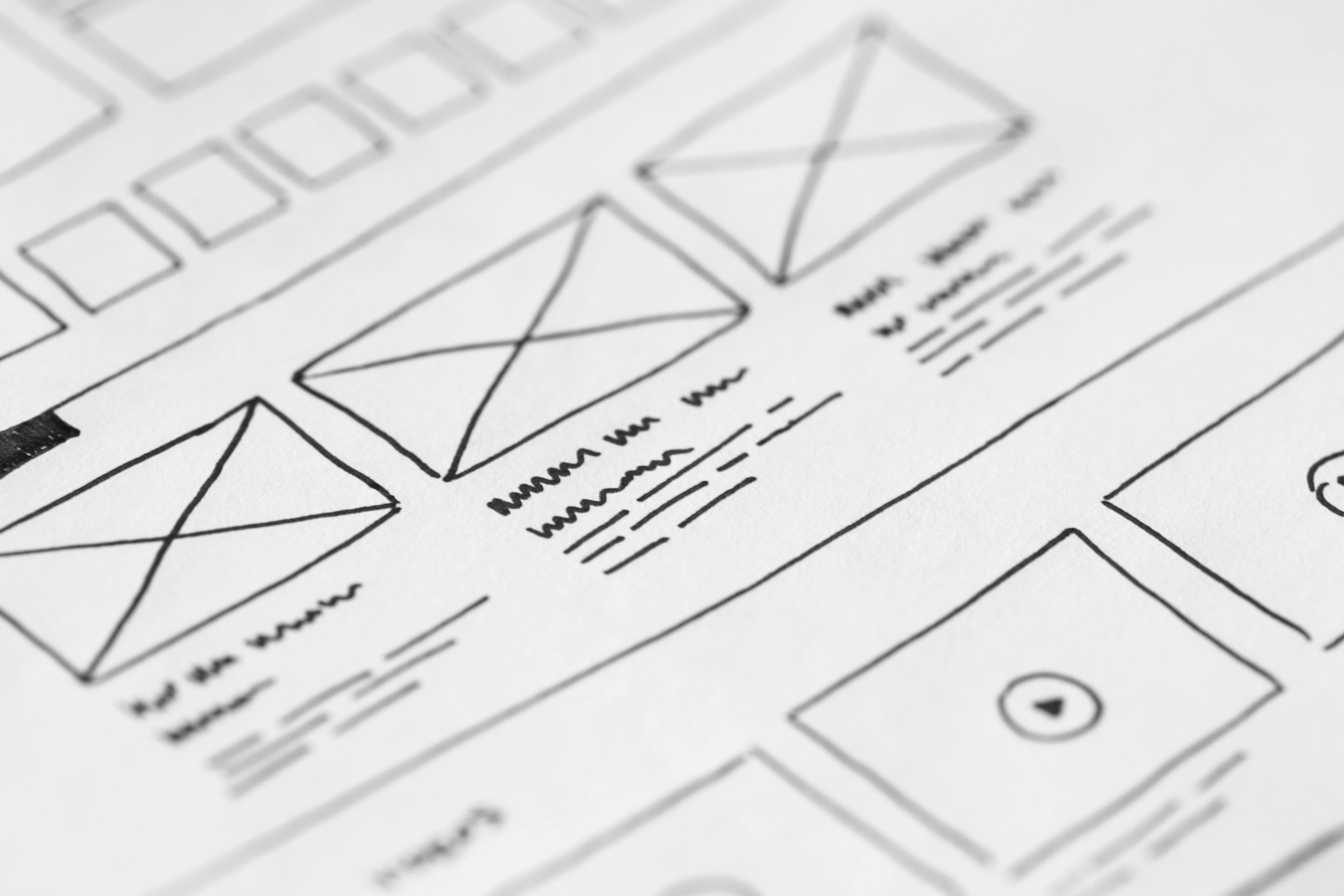
Prototyping means creating an early, testable model of your product before full development begins. It can be anything from a paper sketch to an interactive digital mockup. The goal is to validate design and usability assumptions quickly and cheaply. Fixing a problem after launch can cost ten times more than fixing it during the design phase. You can gather powerful insights with a small group; testing a prototype with just 5 users can uncover around 85% of usability issues.
MVP Fundamentals: Understanding the Core Concept
The MVP is the central piece of the puzzle. But what exactly is it, and what makes it so powerful for startups?
What is a Minimum Viable Product (MVP)?
Coined by Eric Ries in The Lean Startup, a Minimum Viable Product is the version of a new product that allows a team to collect the maximum amount of validated learning about customers with the least effort. Instead of building a perfect, feature packed product, you build just the core functionality needed to solve a primary problem for early adopters. You launch it, gather real world feedback, and iterate. This approach helps you avoid building something nobody wants. For example, Dropbox famously validated their idea with a simple explainer video MVP, which generated a 75,000 person waitlist overnight before they wrote a single line of product code.
Key MVP Characteristics
A true MVP isn’t just a half baked product. It has specific traits:
Core Value Focus: It delivers on the primary value proposition and nothing more.
Usable and Functional: It’s a working product that real users can operate.
Built for Learning: Its main purpose is to gather feedback and data to validate assumptions.
Fast to Develop: Speed is essential. The goal is to get into the Build Measure Learn cycle as quickly as possible.
Targeted to Early Adopters: It’s built for users who are forgiving of missing features as long as it solves a real pain point.
MVP vs. Proof of Concept (PoC)
People often confuse these two, but their goals are different. A Proof of Concept (PoC) answers the internal question, “Can we build this?” It tests technical feasibility. An MVP answers the external question, “Should we build this?” by testing market value with real users. A PoC is a demo; an MVP is the first version of a real product.
MVP vs. Prototype
Similarly, a prototype is not an MVP. A prototype is a mockup used to test design and usability, often before development starts. It’s usually not functional and is meant to be thrown away. An MVP is a functional, albeit minimal, product that is released to the market. A prototype helps you design the product right; an MVP helps you build the right product.
The Benefits of Building an MVP
Choosing to build an MVP isn’t just a trend; it’s a strategic advantage. The benefits are clear:
Reduces Risk: You test your core assumptions before investing heavily, letting you “fail fast” on a small scale.
Faster Time to Market: Getting a product into users’ hands in weeks instead of months or years gives you a head start on learning and capturing market share.
Saves Money: By focusing only on essential features, you avoid wasting resources on things users don’t need.
Attracts Investors: A working MVP with user traction is far more compelling to investors than a slide deck.
Creates Focus: It forces your team to make tough decisions and concentrate on what truly matters.
Expert mvp software development services can help you realize these benefits by guiding you through a disciplined and efficient build process, see how this played out in the Taraki case study.
The Build: Your MVP Development Approach
Once you’re ready to build, you have several paths you can take. The right approach depends on your team’s skills, budget, and timeline.
The Lean MVP Development Approach
Most mvp software development services follow a lean, iterative process. It’s built on a simple feedback loop:
Build: Develop the smallest possible feature set to test your hypothesis.
Measure: Release the MVP to users and collect quantitative (analytics) and qualitative (feedback) data.
Learn: Analyze the data to see what worked and what didn’t.
Iterate: Use those learnings to inform the next build cycle.
This agile approach, often executed in short “sprints,” ensures the product evolves based on real user insights, not just internal assumptions.
Estimating Your MVP Cost
How much does an MVP cost? The answer varies based on feature scope, team rates, and technology. A custom build by a US based team can run into the high five or six figures. However, modern approaches have made mvp software development services far more accessible. For instance, using a specialized no code agency can bring costs down significantly. Some agencies, like Bricks Tech, even offer a Build From Scratch package that delivers a complete MVP in about 8 weeks for around $10,000.
The Rise of Low Code and No Code MVPs
Low Code MVP: Built using platforms that reduce the amount of manual coding through visual interfaces and pre built components. This can make development up to 10 times faster than traditional methods, according to Forrester Research.
No Code MVP: Built entirely without writing code, using platforms like Bubble, Webflow, or Adalo. This empowers non technical founders to build their own products and can dramatically lower the cost and time required. The no code market is growing rapidly as more businesses use it to build applications faster.
Agencies specializing in these technologies can offer incredibly efficient mvp software development services. They combine the speed of visual development with the expertise to build scalable, professional grade applications. Need to get your idea off the ground quickly? Explore a no code development approach.
When to Choose Custom MVP Development
Custom or traditional coding is the right choice when your MVP has unique, complex functionality that no code tools can’t handle, such as a proprietary algorithm or advanced AI. It offers complete control and flexibility but typically comes with a higher cost and longer timeline. This path makes sense for well funded teams with deep technical needs or founders who are themselves experienced developers.
Choosing Your MVP Development Partner
Selecting the right development partner is as critical as validating your idea. The agency you choose is not just a vendor; they are your first technical cofounder. Here are key criteria to consider when evaluating providers of mvp software development services.
Startup Experience and Portfolio Impact
Look for a partner with a proven track record of working with startups. Corporate software development is very different from building an MVP. A great partner thinks like a founder, challenges your assumptions, and focuses on business outcomes, not just shipping features. Scrutinize their portfolio. Do their case studies show real traction metrics like user signups, revenue, or engagement? Vague testimonials are less valuable than concrete results.
Technical and Strategic Capability
Your partner should offer more than just coding. They need strategic depth to help you refine your product roadmap and a design first process to ensure the user experience is excellent from day one. Evaluate their tech stack. Are they proficient in modern, rapid development tools like Bubble or integrating with advanced AI and third party APIs? This technical capability ensures they can build a robust product quickly.
Architectural Scalability
An MVP is a starting point, not a dead end. While its initial goal is learning, it should be built on a foundation that can scale. Ask potential partners how they plan for future growth. A skilled agency will use a flexible architecture, perhaps combining a no code front end with a scalable backend like Supabase or AWS. This hybrid approach allows you to launch fast without creating a product that needs a complete rewrite in six months.
Client Reviews and Reputation
Don’t just take the agency’s word for it. Seek out independent social proof. Platforms like Clutch offer verified, in depth reviews from past clients. Look for consistent feedback on their communication, project management, schedule adherence, and overall quality. A strong reputation built on successful client outcomes is one of the clearest signals of a reliable partner.
US Regulatory Alignment
For startups in sensitive industries like fintech, healthcare, or any field handling significant personal data, regulatory compliance is non negotiable. Even at the MVP stage, you must consider regulations like HIPAA or data privacy laws. Ensure your development partner understands these requirements and can build a compliant application. Lack of awareness here can create significant legal and technical debt later on.
Benefit and Risk of a US Based MVP Partner
Hiring a US based development team offers benefits like seamless communication in the same time zone and a deep understanding of the domestic market. However, this advantage often comes with a significant risk for early stage startups: cost. High developer salaries in the US can quickly deplete a founder’s limited runway.
An alternative model is the global hybrid team. This structure combines North American leadership for strategy and client management with a technical team in a more cost effective location. This can provide the best of both worlds: high quality strategic oversight aligned with your market and an efficient build process that makes your capital go further.
After the Launch: Feedback and Iteration
Launching your MVP isn’t the finish line; it’s the starting line. Now the real work begins: learning from your users and making the product better.
Collecting User Feedback
Feedback collection is the lifeblood of your product’s evolution. You can gather it through user interviews, in app surveys, support chats, and more. Actively listening is crucial. Startups that adapt based on customer feedback are three times more likely to succeed. In contrast, 80% of failed startups did not adequately respond to user input.
Using Analytics to Understand Behavior
While feedback tells you what users say, analytics tells you what they do. Tracking key metrics like user activation, engagement, and retention provides the hard data to back up your decisions. A/B testing different features or messages can help you optimize based on real behavior. Organizations that effectively use customer data outperform their peers by 85% in sales growth. Using analytics for your MVP instills a data driven culture from day one.
Iterating Your Way to Success
Iteration is the process of making continuous, incremental improvements to your product based on what you’ve learned from feedback and analytics. Each cycle makes the product a little better, moving you closer to product market fit. This is a journey of constant refinement. A stunning 92% of successful startups pivoted at least once from their original idea, showing that iteration and adaptation are the norm, not the exception.
By embracing this cycle, you can turn a simple MVP into a thriving product that users love. The journey requires patience, discipline, and a commitment to listening. A great partner for mvp software development services doesn’t just build your V1; they help you navigate this iterative journey post launch.
Ready to turn your vision into a reality? Get a free consultation with our product experts.
Frequently Asked Questions
1. What is the main goal of mvp software development services?
The primary goal is to launch a core version of your product quickly to test your most critical business assumptions with real users. It’s about maximizing learning while minimizing risk and upfront investment.
2. How long does it take to build an MVP?
Timelines vary, but a key benefit of the MVP approach is speed. While custom projects can take many months, specialized agencies using no code and low code tools can often deliver a high quality MVP in just 4 to 8 weeks.
3. What’s the difference between an MVP and a prototype?
A prototype is a non functional mockup used to test design and usability concepts before building. An MVP is a functional, working product, albeit with limited features, that is released to the market to test its value proposition.
4. How much do mvp software development services cost?
Costs can range from a few thousand dollars for a simple no code build to over $100,000 for a complex custom coded application. Fixed price packages from agencies like Bricks Tech, often around $10,000, provide a predictable and affordable option for many startups.
5. Can I build an MVP with no coding skills?
Absolutely. The rise of powerful no code platforms like Bubble and Adalo has made it possible for non technical founders to build and launch sophisticated web and mobile applications without writing a single line of code.
6. Why is user feedback so important after launching an MVP?
Your MVP is built on assumptions. User feedback is the reality check that validates or invalidates those assumptions. It tells you what’s working, what’s not, and what users truly need, guiding your iteration process toward achieving product market fit.